Why Warsaw Is Culturally and Economically Ahead of Berlin
A Story of History, Resilience, Skyline Growth, and Modern Creative Power
When comparing European cultural capitals, Berlin is often the first city that comes to mind, a sprawling metropolis known for its vibrant arts scene, storied history, and iconic institutions. Yet a deeper look at Warsaw, a city that rose from near total destruction in World War II to emerge as one of Europe’s most dynamic cultural and architectural centres, reveals a compelling argument that Warsaw is not just keeping pace with Berlin, but in many areas it now surpasses it.
Warsaw’s ascendance is not just emotional or anecdotal. It can be measured in cultural density, urban growth, skyline evolution, creative output, and it must be understood against the backdrop of its remarkable history.
From Ruin to Renaissance, A City Rebuilt
Warsaw’s story is one of near mythic resilience. By the end of World War II, approximately ninety percent of the city was destroyed. Entire neighbourhoods, cultural institutions, national archives, and historical buildings were erased in a systematic attempt to obliterate Polish identity. Rebuilding Warsaw was not simply an architectural endeavour, it was a cultural mission to restore memory, beauty, and creativity in the very bones of the city. The painstaking reconstruction of the Old Town from original plans and surviving fragments became a symbol of cultural survival. Its designation as a UNESCO World Heritage Site honours not just the result, but the story of revival that made it possible.
Berlin, by contrast, was also devastated during World War II, but much of its infrastructure, including museums and civic buildings, survived or was restored in a unified Germany after 1990. This meant Berlin could more quickly reclaim its position as a cultural centre after the war. Warsaw, however, had to start almost from scratch, and did so with creative determination, building institutions that reflect not just heritage but a future facing vision of culture.
Cultural Infrastructure, Numbers That Speak Volumes
One of the most compelling ways to compare Warsaw with Berlin is through cultural infrastructure and engagement, how many institutions, events, and opportunities a city offers relative to its size.
Museums and Galleries
Warsaw hosts over sixty museums and galleries accessible to the public, including world first and world class institutions such as the Museum of Posters and the Museum of the History of Polish Jews. It also supports numerous art galleries that engage local and international artists. Berlin, as of recent data, is home to around one hundred and fifty three museums and more than six hundred art galleries, a larger total number. But when adjusted for population size, Berlin approximately three point seven million, Warsaw approximately one point eight million, Warsaw’s cultural density per capita is extremely high, meaning more opportunities per resident to engage with cultural content.
Theatre, Cinema, and Festivals
Warsaw’s cultural ecosystem includes thirty eight theatres, twenty seven cinemas, forty four art galleries, and thirteen concert halls, and the city hosts two hundred public events annually with more than one hundred cultural functions every month. These events include major celebrations such as the Night of Museums, the Orange Warsaw Festival, and Chopin piano concerts in scenic outdoor settings. Berlin’s cultural calendar is no less vibrant, featuring major events like Berlin Art Week, film festivals, contemporary performance series, and countless gallery openings that attract global audiences. Yet Warsaw’s model of community integration means culture is not only for visitors, but part of daily life. Its events are deeply woven into the rhythms of the city rather than standing apart as isolated annual spectacles.
Active Engagement and Cultural Participation
Data shows that in Warsaw, theatre performances exceed nine thousand per year, and cinema admissions annually surpass six point five million, demonstrating a very high level of local cultural participation. This local engagement is crucial, cultural vitality is not only about international tourism or flagship institutions, but about how residents experience and participate in culture daily. Berlin’s larger numbers are impressive, but they scale with a population roughly double that of Warsaw.
Modernity and the Skyline, Warsaw’s Architectural Statement
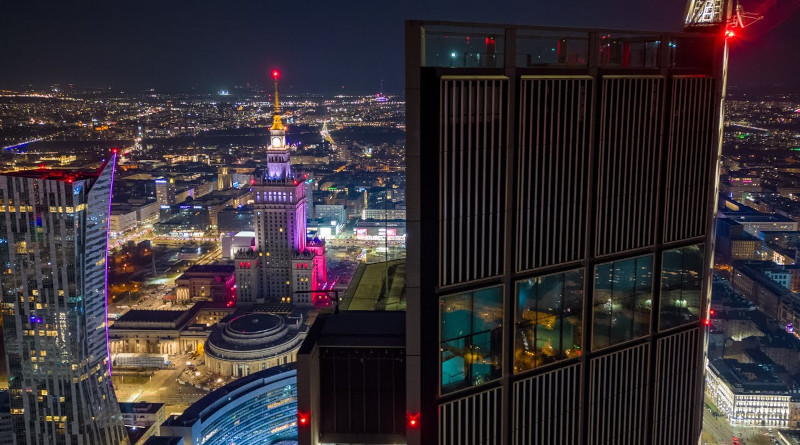
Warsaw’s urban identity today is symbolized by its skyline transformation. In 2025, Warsaw has thirty two skyscrapers taller than one hundred meters, including thirteen buildings taller than one hundred fifty meters and four above two hundred meters, anchored by the Varso Tower at three hundred ten meters, which is the tallest building in the European Union.
This scale of vertical development is significant when compared with Berlin, where the highest true skyscraper reached by 2025 is the Estrel Tower at around one hundred seventy six meters, and Berlin only has about fourteen buildings above one hundred meters and a single building exceeding one hundred fifty meters. In other words, Warsaw has nearly three times as many tall buildings above one hundred meters as Berlin, and its Varso Tower even exceeds Berlin’s tallest skyscraper by more than one hundred thirty meters. This is not just a skyline triumph, it reflects Warsaw’s economic dynamism, architectural ambition, and urban planning priorities.
Warsaw’s skyline growth has been dramatic, from only about ten buildings over one hundred meters in the early 2000s to triple that number by 2025, indicating sustained investment and growth. Berlin’s skyline, while culturally rich and historic, reflects a different urban philosophy. Its skyline is lower, more diffusion oriented, and shaped by preservation policies and a post war ethic that favours mixed use development over vertical expansion.
Cultural Identity Through History
Warsaw’s cultural institutions often engage directly with history and identity in ways that are emotionally immersive. The Warsaw Uprising Museum and the POLIN Museum of the History of Polish Jews are not only repositories of artifacts, but narrative experiences that draw visitors into historical reflection and empathy. The Old Town, reconstructed stone by stone after World War II, stands as an extraordinary testament to cultural reclamation and architectural devotion.
Berlin’s cultural institutions are globally renowned, with assets like Museum Island housing world treasures and the Jewish Museum Berlin offering powerful historical insight. Berlin’s art ecosystem attracts roughly six thousand to seven thousand working artists, a number reflecting its reputation as a magnet for creative talent. Yet Warsaw’s powerful engagement with history, its identity as a city that refused to disappear, infuses its cultural scene with narrative depth that resonates with creative communities and visitors alike.
Economic Power and Potential, Warsaw vs Berlin
Warsaw’s cultural leadership is reinforced by its economic dynamism and growth, which position the city not just as a creative centre, but as a modern economic powerhouse within Europe. While Berlin’s economy remains large in absolute terms, Warsaw’s growth trajectory, productivity per resident, and entrepreneurial energy demonstrate remarkable momentum. Warsaw’s gross metropolitan product is estimated at roughly one hundred billion euros, placing the city among the top twenty metropolitan economies in the European Union, and generating nearly one fifth of Poland’s national income. This makes Warsaw the dominant economic hub of the Visegrád Group and one of Central Europe’s most influential business centres.
Comparative regional data show that the Warsaw metropolitan region contributes about eighteen percent of Poland’s GDP, and its GDP per capita of around thirty nine thousand euros is more than twice the national average, a strong indicator of concentration of wealth and productivity in the capital region. When compared directly with Berlin, the differences tell a nuanced story.
Berlin’s total GDP is larger in absolute terms, roughly three times Warsaw’s city GDP, reflecting Germany’s larger national economy. But Warsaw’s GDP per capita when adjusted for purchasing power parity is highly competitive, and the city’s unemployment rate is substantially lower, indicating strong local labor participation and robust business activity.
Warsaw also has a higher density of students relative to its population, which feeds fresh talent into its expanding creative, tech, and cultural sectors, roughly one hundred thirty one students per one thousand inhabitants, compared to fifty three students per one thousand in Berlin.
Economists point out that Warsaw’s position as a regional economic engine is magnified by Poland’s overall rapid growth within the EU, where structural reforms and integration into global markets have boosted productivity over the past two decades. What this economic picture shows is that Warsaw’s creative and cultural rise is underpinned by a powerful economic engine, a combination of strong local production, attractive business environment, high employment, youthful talent pipelines, and integration into European and global markets. Berlin’s cultural infrastructure remains globally significant, but Warsaw’s economic momentum and vibrancy at both the cultural and commercial levels suggest a city that is not only catching up, but shaping its own distinctive path as a European capital of influence, creativity, and prosperity.
Education, Innovation, and Cultural Growth
Warsaw’s role as a cultural hub is further strengthened by its educational landscape and creative industry growth. With fifteen public higher education institutions and approximately two hundred forty thousand students per year, Warsaw is not only a cultural destination, but also a talent incubator for future generations of artists, designers, musicians, and thinkers. Berlin also attracts students and young talent from around the world, supported by prominent universities and art schools, but Warsaw’s affordability, rapidly growing creative sectors, and active cultural participation make it an increasingly attractive centre for emerging talent across Europe.
The Narrative Edge, Warsaw’s Cultural Momentum Today
If culture in Berlin sometimes feels shaped by its historic weight and breadth, Warsaw’s culture has momentum embedded in uplift, regeneration, and community involvement. Warsaw does not merely display art, it engages people with culture as part of everyday life. Warsaw’s vibrant MICE infrastructure highlights its role as a European hub for intellectual exchange, hosting roughly twenty five thousand business and cultural events annually, including congresses that blend academic, creative, and artistic discourses.
This kind of engagement, coupled with ambitious architectural growth and a thriving cultural calendar, offers a powerful picture of a city on the rise, not only resilient in the face of history, but actively shaping the future of European culture and identity.
Conclusion, A New Cultural Narrative in Europe
Warsaw and Berlin are both indispensable to Europe’s cultural landscape. Berlin continues to influence global art, history, and contemporary creativity with its vast museum network and global reputation. Yet Warsaw’s extraordinary journey from destruction to cultural renaissance, its density of cultural institutions per capita, its skyline that now towers above other European capitals, and its deep integration of culture into public life suggest that Warsaw is not only a peer to Berlin, but in many respects ahead in creating a dynamic, participatory cultural experience for residents and visitors alike.
Takeway from Hayenne
Warsaw is no longer simply a rebuilt city. It is a culture capital in its own right, a place where past and future converse, where creativity flourishes across art, music, theatre, architecture, and where a new generation sees culture not just as spectacle, but as living identity.