How Paris Became the Heart of Fashion Craft in December 2025
Paris in December is a city wrapped in a unique blend of cold crisp air and warm human energy. The Seine glitters in late afternoon light and the buzz of the holiday season merges with the timeless rhythm of cultural life. Cafes hum with laughter and conversation long into the night. In this magical month, Paris also became the setting for one of the most talked about cultural moments of the year. At the Palais Galliera, the city’s renowned fashion museum, Weaving, Embroidering, Sublimating opened to an audience eager to feel, see and understand the beating heart of fashion as craft. Through its textures, colors and stories, this exhibition became a living narrative about the past, present and future of human creativity.
In a world where fashion is often reduced to trends and logos, this moment reminded people that true artistry lives in every stitch, every thread and every gesture of creation. It spoke to those who believe that behind every garment there is a story waiting to be told, a human heartbeat waiting to be heard.
A Museum, a City, and the Pulse of Craft
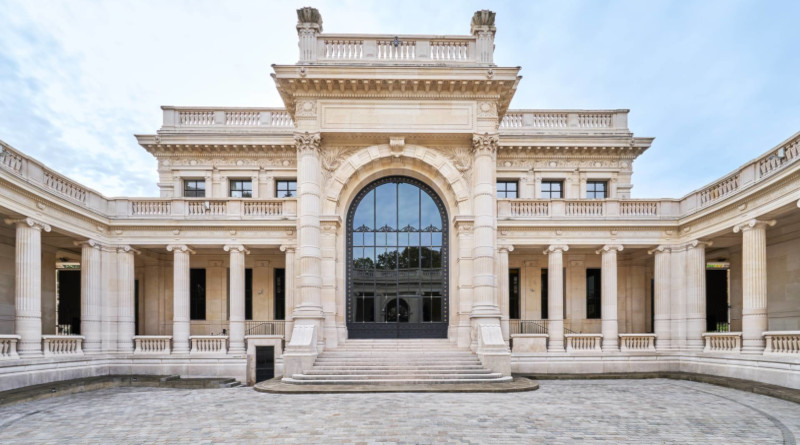
The Palais Galliera stands gracefully on Avenue Pierre Iᵉʳ de Serbie, a grand structure that has long been dedicated to fashion history. It has housed more than 200,000 garments and accessories that span centuries of dress and design. At first glance it might be a traditional museum of fashion, but during the winter of 2025 it was transformed into something more vibrant, more alive and more human.
On December 13, the current exhibition opened. It invited visitors into a journey through fashion craftsmanship with a focus on weaving, embroidery, printing, lace making and ornamentation. The show is part of a trilogy that highlights the deep and intricate work involved in creating garments that embody both beauty and skill. Each object on display revealed a chapter in the story of fashion as a craft, not simply as visual decoration.
In the first gallery, floral motifs guided the eye through centuries of ornamentation. Flowers have been part of fashion for generations, wrought into fabrics and embroidered onto bodices to express everything from ceremonial dignity to playful elegance. Visitors lingered over an 18th century waistcoat in brocade that seemed to shimmer with history. Nearby, a contemporary laser printed Balenciaga ensemble spoke of how centuries old motifs continue to inspire modern design.
Across more than 350 works, from garments and accessories to tools and photographs, the exhibition illustrated how these techniques were not static relics but vibrant forms of artistic expression still relevant today. It offered a poetic and sensory journey where texture, color and shape became language. Each piece felt like a conversation between the hands that made it and the person who came to admire it.
The Hidden Hands of Fashion
One of the deepest revelations of this Parisian exhibition was how it repositioned the artisans behind great fashion houses as creative protagonists rather than invisible contributors. Often the names of master weavers, lace makers or embroidery specialists are lost behind the glamour of a designer label. In Weaving, Embroidering, Sublimating, visitors met these creators through objects and tools that revealed their presence in every garment.
For example, lace crafted with painstaking precision seemed to float like light itself, each loop and twist a testament to patience and skill. Embroidery, often viewed as mere decoration, was shown as a language of its own filled with nuance and emotion. Textile samples laid out in the gallery were more than materials; they were fingerprints of the artisans who made them, tactile evidence of human ingenuity.
Several pieces from historic fashion houses like Lesage and Hurel stood alongside works by contemporary artisan designers and young talents invited to contribute specially to the exhibition. The interplay of old and new reminded visitors that craft is not an artifact of bygone days but a living tradition shaped by both heritage and innovation.
For many young Parisian designers and students, this was an epiphany. They saw how the gestures of artisans from long ago continue to shape the vocabulary of fashion today. Some of these designers traveled from other countries, drawn by word of the exhibition, and said it gave them a renewed sense of purpose. One emerging textile artist described how touching a centuries old silk sample made her feel connected to a continuum of creativity that extended from the past into her own future work.
Paris in December: A Cultural Tapestry
December in Paris is not just winter holidays and glittering lights. It is a time when culture seems to breathe in every street corner. Museums host special late openings and galleries offer talks and workshops that mingle locals and visitors in conversation. On a Friday evening the Palais Galliera extended its hours, allowing night time visits that turned the space into a communal living room where people shared impressions over coffee and wine.
As the exhibition opened, nearby galleries and museums added to the cultural buzz of the city. At the Grand Palais, a major survey by artist Mickalene Thomas opened, exploring themes of love, identity and presence in modern visual art. This show, filled with monumental collage works and personal installations, offered another slice of how contemporary creators are redefining canon and narrative in art.
The Fondation Cartier pour l’Art Contemporain inaugurated a new chapter by reopening a historic building in the heart of the city, expanding the dialogue around inclusive and experimental contemporary art. Through immersive pieces that examined social themes such as migration and climate change, it became a meeting place for philosophy, community and innovation.
Together these exhibitions turned Paris into a vast cultural tapestry in December 2025. Instead of isolated viewing experiences, visitors found interconnected stories of tradition, reinvention and dialogue. Street style photographers captured fashion lovers outside the Galliera, wearing outfits inspired by the craft and sophistication within, mixing couture with personal expression in ways that felt both rooted in history and boldly modern.
Stories of People and Craft
At the heart of this cultural moment were the human stories behind the work. In the gallery, a French grandmother guided her granddaughter by the hand, pointing out a piece of lace that reminded her of the garments her own mother once wore. A group of fashion students from Berlin debated how embroidery could find new forms in sustainable textiles. A designer from Japan brought his notebook to record how the floral motif could inform a future collection.
One woman from Senegal shared how she saw familiar motifs in the embroidery, similar to the handwork of artisans in Dakar. She explained how this connected her personal heritage to a global lineage of craftsmanship. Others took part in workshops where they could try their hand at simple embroidery techniques. Some left with threads and fabric samples on their jackets, visible badges of their experience.
Children in the exhibit’s activity zones learned how paper flowers were made, a playful echo of the floral motifs in the main galleries. In seeing young hands fold petals and learn about texture and shape, parents spoke of hope that these traditions might continue through new generations, alive and appreciated in new ways.
The Meaning of Craft in a Fast World
One striking aspect of Weaving, Embroidering, Sublimating was how slow craft challenged the pace of contemporary life. In a digital age defined by instant everything, the exhibition emphasized patience, concentration and the value of time invested by human hands. Watching a lace sample up close reminded viewers that true mastery cannot be rushed. The exhibit asked visitors to slow down, look closely and reflect, to consider that beauty might be in the detail rather than in the headline.
This sentiment resonated not only in fashion circles but among thinkers and audiences craving authenticity. With global fashion often criticized for overproduction and disposability, the exhibition became a statement about purpose and mindfully created objects. A young textile designer from London expressed that seeing the lace and embroidery up close changed her perspective on her own process. She realized that her work needed not just speed and novelty but depth and meaning.
The motifs themselves carried symbolic weight. The flower, chosen as a central theme, bridged centuries of design and human expression. It appeared in everything from brocaded silk of the 18th century to modern meta‑textile pieces, each variation reflecting a different facet of culture, emotion and aesthetic language. In this way, ornamentation became a metaphor for creative life itself: rooted in the material world yet reaching for poetry.
Beyond the Exhibition: Paris as Creative Ecosystem
Paris was not just a backdrop for this cultural moment it was a participant in it. The city’s DNA is woven with fashion and art. From the ateliers of the Marais to artisan workshops tucked away in covered passages, from couture houses in the Golden Triangle to independent galleries in Belleville, creative expression pulses through its streets. In December 2025, visitors could feel that rhythm more vividly than ever.
Independent boutiques hosted pop‑up showcases inspired by the exhibition. Craft workshops invited visitors to learn traditional techniques like hand‑dyed silk or natural dye extraction. Conversations at cafes often turned to fashion history or contemporary design movements. People arriving in Paris specifically for the exhibition found themselves exploring other cultural venues, discovering that one creative spark could illuminate an entire cityscape.
For residents and newcomers alike, there was a sense of collective discovery. A young artist from Madrid wrote in her journal that Paris felt, in those weeks, like a global studio where ideas, histories and traditions met and recombined. A musician from Milan spoke of how the exhibit influenced his compositions, thinking of rhythm and texture in music as analogous to thread and pattern in textiles.
What This Cultural Moment Means for the Future
The importance of Weaving, Embroidering, Sublimating extends far beyond the walls of the Palais Galliera. It represents a renewed respect for craft as cultural force and a reminder that heritage and innovation can coexist in powerful ways. It invites young people to consider not just what they make but how and why they make it. It shows that a garment can be a voice, a story, a memory and a bridge between traditions and future possibilities.
By highlighting the artisans often overshadowed by fashion’s glamorous front stage, Paris in December 2025 celebrated the hidden hands that shape culture. It showed that craftsmanship is not an outdated concept but a living, breathing ecosystem of knowledge, skill and expression that resonates with a generation looking for authenticity, connection and meaning.
The exhibition, the city and the people who came to experience it together created a narrative that will continue to echo into 2026 and beyond. Paris reminded the world that fashion belongs to everyone and that the most profound artistry may be found not in fleeting trends but in the patient, human gestures that shape every piece of cloth into a work of art.
Sources APA
- Palais Galliera exhibition Tisser broder sublimer les savoir-faire de la mode. 2025, December. Paris Musées.
- Weaving embroidering sublimating Paris fashion craftsmanship spotlighted. 2025, December. Le Monde.
- Mickalene Thomas new survey at the Grand Palais is for lovers. 2025, Vogue.
- Fondation Cartier ushering in a new era for contemporary art in Paris. 2025, Vogue.