
Supermodels and the Ethics of AI in Fashion Advertising
Fashion has always been about more than clothes. It is about faces, bodies, labour and desire. Now, as artificial intelligence begins to generate models who never lived, never aged and never complained, the industry finds itself confronting an uncomfortable question. What happens to women when the image replaces the human?
A Perfect Face With No Past
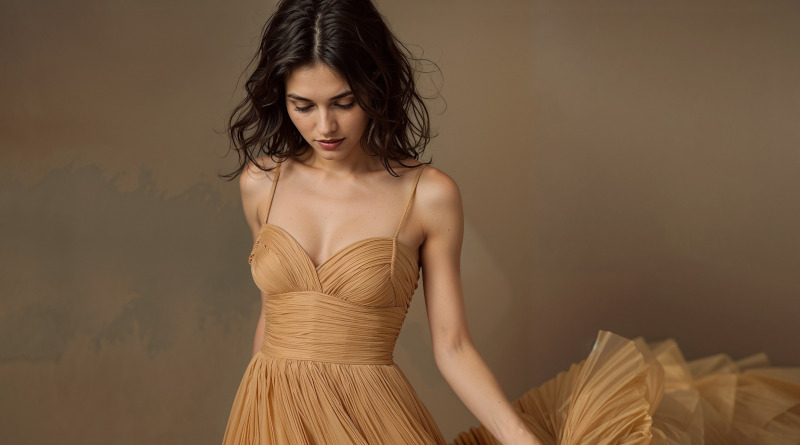
Earlier this decade, a major fashion brand released a glossy advertising campaign featuring a striking young woman. Her skin was flawless, her posture confident, her gaze magnetic. She looked like the future of fashion. There was only one detail missing. She did not exist: No casting, No photographer, No hair and make up team, No model. For marketing executives, this was innovation.
For many women working in fashion, it felt like something closer to disappearance. Naomi Campbell once remarked, “I have worked too hard to be seen to be replaced by an illusion.” She was not speaking about artificial intelligence at the time, but her words now echo through an industry quietly experimenting with AI created models and fully synthetic advertising campaigns. This is no longer a marginal trend. From fast fashion to luxury houses, brands are exploring digital faces that promise efficiency, control and endless perfection. The ethical cost of that promise is only just becoming visible.
From Supermodels to Synthetic Icons
Fashion imagery has always been shaped by technology. Photography changed illustration. Digital retouching reshaped beauty standards. Social media transformed models into brands. Artificial intelligence, however, goes further. It removes the human subject altogether. Levi’s made headlines when it announced plans to test AI generated models to increase diversity in its marketing. The intention was framed as progressive. The reaction was sceptical. Models and activists asked why simulated diversity was being prioritised over hiring real people from under-represented communities. Jameela Jamil, a vocal critic of harmful beauty standards, summed up the unease when she said, “Women are already competing with filters. Now we are competing with something that has never had a body or a bad day.” AI models do not age. They do not gain weight. They do not get pregnant or injured. They do not negotiate contracts or ask for safer working conditions. In a business that has long relied on young female labour, that silence is commercially attractive and ethically troubling.
The Invisible Labour Behind the Image
AI generated fashion models are not created from nothing. They are trained on enormous datasets made up of real images. Those images overwhelmingly feature women. Many belong to professional models whose work now feeds systems that may one day replace them. This raises a basic question of fairness. If an artificial model is built using the faces and bodies of real women, where does authorship end and appropriation begin? The philosopher John Rawls argued that a just system distributes benefits and burdens fairly. In the current fashion AI economy, the benefits flow towards brands and technology firms. The burdens are carried by models whose likeness, style and physical traits become raw material. Karen Elson once said, “Our bodies are our craft.” When that craft is absorbed into an algorithm without consent or payment, it stops being inspiration and starts looking like extraction.
Beauty Standards, Automated
Fashion has never been neutral about beauty. Artificial intelligence does not remove bias from the system. It automates it. Most AI generated models share a familiar look. Youthful. Slim. Symmetrical. Often racially ambiguous but safely within conventional ideals. These are not accidental outcomes. They reflect the data used and the people making decisions about what sells. Adwoa Aboah, model and founder of Gurls Talk, has repeatedly spoken about the pressure of perfection. “Representation is not about being flawless,” she has said. “It is about being allowed to exist as you are”. An AI model is always flawless. That flawlessness risks becoming the new norm. When perfection is manufactured at scale, real bodies inevitably look like errors by comparison.
Inclusion or Illusion
Supporters of AI generated fashion imagery often argue that it can be a force for inclusion. Algorithms can create models of different body shapes, skin tones and abilities without the limits of traditional casting. Critics respond that simulated inclusion is not the same as social change. Hannah Arendt warned against systems that create the appearance of progress while avoiding responsibility. An artificial plus size model does not face discrimination. An artificial Black model does not encounter racism. They do not need protection because they cannot be harmed. Paloma Elsesser has been clear on this distinction. “Visibility without opportunity is not empowerment,” she has said. If brands replace real women with synthetic ones, diversity becomes a visual effect rather than an economic reality.
The Cost of Efficiency
From a business perspective, the appeal of AI models is obvious. They reduce costs. They speed up production. They eliminate unpredictability. Fashion, however, is also a major employer of women, particularly young women and those from marginalised backgrounds. Modelling has often provided access to income, travel and influence for people excluded from other industries.
Replacing human models with artificial ones is not simply a creative decision. It is a labour decision. Karl Marx warned that when labour becomes abstract, the worker becomes invisible. In fashion advertising, the worker may now vanish entirely, replaced by an image that looks human but holds no rights.
What Women in Fashion Are Actually Saying
It is important to note that most models are not rejecting technology outright. Many are asking for rules, transparency and consent.
Arizona Muse, now an environmental campaigner, has argued that innovation must remain accountable. “Fashion can lead change,” she has said, “but not by forgetting the people who built it”. Some models are exploring digital twins, licensed virtual versions of themselves created with consent and contracts. This approach allows women to retain control over their image while participating in new technology. This reflects the ethical principle articulated by Kant, who insisted that people should never be treated merely as a means. A consensual digital replica is collaboration. A synthetic body trained on scraped images is commodification.
The Psychological Impact on Audiences
The ethical debate does not end with labour. It extends to the people consuming fashion imagery. For decades, women have been told that beauty is something to chase. AI generated models raise the stakes by presenting bodies that are literally unattainable.
Cindy Crawford famously said, “Even I do not look like Cindy Crawford”. In an era of artificial models, no one ever will. For young women scrolling through campaigns and social feeds, the line between real and artificial is often invisible. The comparison is unavoidable and unwinnable. Jean Baudrillard wrote about a world where representations replace reality. Fashion advertising may now be entering that phase, where the image no longer reflects the human but replaces it.
Transparency as an Ethical Minimum
If artificial intelligence is to remain part of fashion advertising, ethical standards must evolve quickly. Many industry observers argue for basic principles. Audiences should be told when an image is AI created. Consent should be mandatory when human likeness informs artificial models. Human labour should be prioritised, not quietly displaced. Economic value should be shared with the people whose work trains these systems. Ethics, as philosopher Paul Ricoeur wrote, is about living well with and for others within fair institutions. Fashion will not be judged by how realistic its artificial models appear, but by how responsibly they are used.
Who Gets to Be Seen in the Future of Fashion
Fashion has always shaped ideas about worth, desirability and belonging. Artificial intelligence now plays a role in deciding which bodies are visible and which are optional. The question is not whether AI models are impressive. They are. The question is whether an industry built on women’s creativity, presence and labour can justify replacing them with perfected simulations. Naomi Campbell once said, “Diversity is not a moment. It is a movement.” A movement, crucially, requires people. As fashion steps further into the age of artificial imagery, it faces a choice. Artificial intelligence can amplify women’s voices, protect their rights and expand representation. Or it can quietly erase them behind flawless faces that never speak. The future of fashion advertising will be defined not by technology alone, but by whose humanity it chooses to preserve.


