
What Okinawa Can Teach Us About Living Longer Without Biohacking
Japan’s Okinawa islands have attracted researchers for decades because of their unusually long-lived residents. Their traditional diet, everyday movement and close social ties offer lessons that are less expensive than the latest longevity treatments – and supported by a growing body of research.
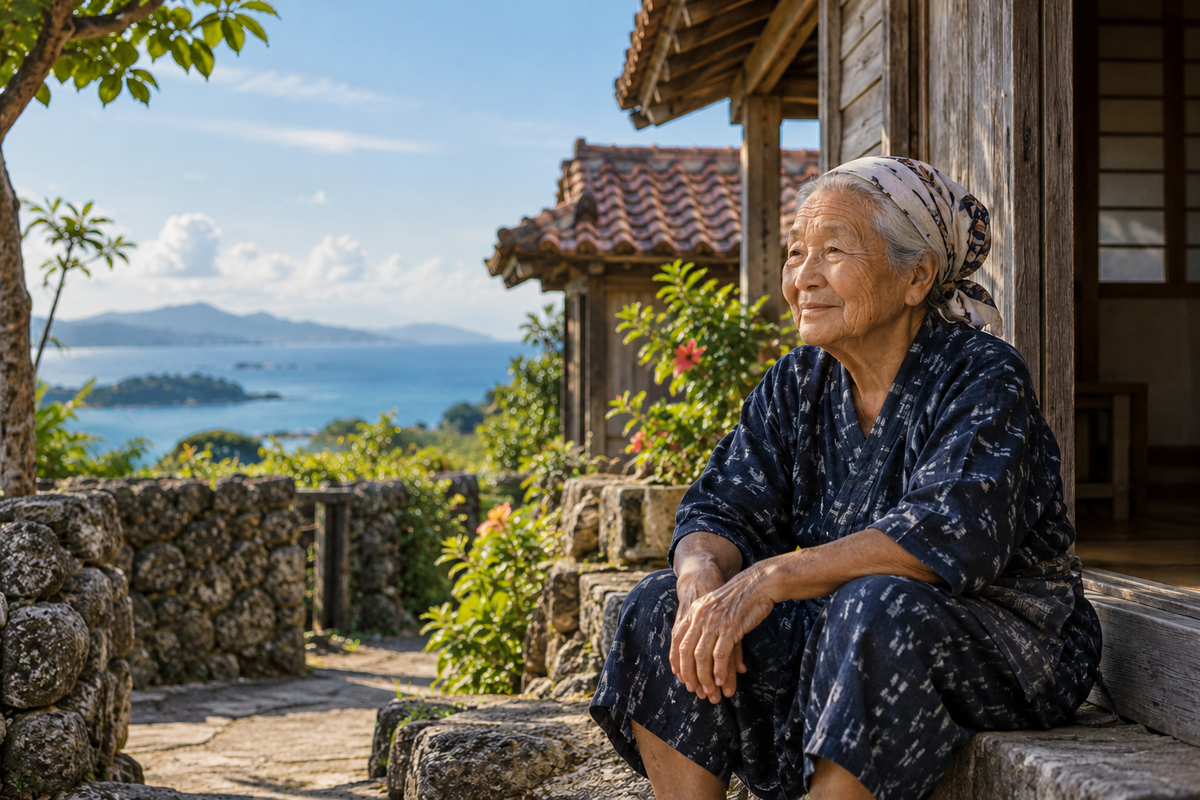
Okinawa has one of the world’s best-known populations of centenarians, with more than 1’000 people aged 100 or over among its approximately 1.46 million residents. The Japanese islands have spent decades attracting scientists interested in why some people remain active and healthy well into old age.
Their findings are very interesting at a time when longevity has become an expensive branch of the wellness industry. Clinics offer biological-age testing, personalised supplements and treatments intended to slow ageing. Yet many of the habits associated with Okinawa’s oldest residents involve familiar activities: eating vegetables, walking, maintaining friendships and continuing to work or contribute to their communities.
None provides a guarantee of reaching 100. Researchers have nevertheless found evidence connecting these habits with lower risks of chronic disease and premature death.
What Makes Okinawa Different?
The Okinawa Centenarian Study, which began in 1975, has examined the health, genetics and lifestyles of some of Japan’s longest-lived people.
In a 2007 study published in the Annals of the New York Academy of Sciences, researchers including Bradley and D. Craig Willcox analysed six decades of historical population data. They found that older generations of Okinawans had maintained relatively low body weights throughout adulthood, experienced little weight gain with age and showed lower mortality from several age-related diseases.
Their findings suggested that traditional dietary habits may have contributed to healthier ageing, although they could not establish precisely how much of Okinawa’s longevity came from food, genetics or other circumstances.
The distinction between generations matters. Okinawa’s reputation rests largely on people born many decades ago, whose daily lives differed considerably from those of younger residents.
Fast food, greater car use and more sedentary lifestyles have become familiar across the islands. The traditional Okinawan way of eating has also changed. As a result, scientists cannot assume that today’s younger population will enjoy the same longevity advantage.
Nor is every claim made about the world’s so-called Blue Zones equally secure. Researchers continue to examine the reliability of historical age records and the methods used to identify exceptional concentrations of centenarians.
Okinawa remains an important subject for longevity research, but its experience is best understood as evidence of how several aspects of daily life may work together.
The Traditional Okinawan Diet
One of the most extensively studied features of Okinawan life is its traditional diet, which relied heavily on sweet potatoes, vegetables, soya products and small quantities of other foods.
Purple sweet potatoes, tofu, seaweed, mushrooms and leafy vegetables provided fibre and a broad range of nutrients. Goya, the island’s distinctive bitter melon, also featured regularly.
Animal products were eaten, but in much smaller quantities than in many contemporary Western diets. Older generations generally consumed relatively little saturated fat and fewer calories than modern populations.
Okinawans traditionally regard food as nuchigusui, meaning medicine for life. Another familiar principle, hara hachi bu, encourages people to stop eating before they feel completely full, commonly described as eating until approximately 80% full.
Researchers have investigated whether the lower calorie intake of earlier generations helped protect them against age-related illness. The 2007 Okinawan study found patterns consistent with some of the benefits of calorie restriction observed in animal research, although the effect on human lifespan remains uncertain.
For readers interested in adopting aspects of the diet, its composition is more practical than attempting to reproduce historical calorie intakes.
Vegetables, beans, whole grains and other fibre-rich foods can form the basis of everyday meals without requiring expensive ingredients or specialist supplements. There is also little reason to search for Okinawan produce specifically when locally available alternatives provide similar nutritional benefits.
Strict calorie restriction deserves more caution, particularly in older adults who need adequate energy and protein to maintain muscle and strength.
Why Everyday Movement Matters
Physical activity in traditional Okinawan communities was rarely confined to a designated exercise session.
Gardening, working in fields, preparing food and visiting neighbours involved repeated movement throughout the day. Many older residents continued these activities well beyond conventional retirement age.
In the November 2026 issue of Condé Nast Traveller, journalist Anita Bhagwandas describes meeting older Okinawans who still tend gardens, grow vegetables and move comfortably around their homes. She also observes how frequently residents rise from and sit on traditional floor mats, a simple movement that requires balance, mobility and muscular strength. Their lifestyles illustrate the potential benefits of remaining physically active throughout the day.
The World Health Organization recommends that adults undertake at least 150–300 minutes of moderate-intensity aerobic activity each week, together with muscle-strengthening exercise on at least two days. For older adults, it also recommends activities that develop balance and functional strength to help prevent falls.
Walking to the shops, taking the stairs, gardening and doing household tasks can contribute to those targets. More structured exercise remains beneficial, particularly when it challenges the muscles and cardiovascular system sufficiently.
Maintaining physical independence as we age depends on both movement and strength. Okinawa’s older residents provide examples of how activity can remain part of ordinary life rather than something reserved for the gym.
The Health Benefits of Having Friends
Okinawan communities have a tradition known as moai, in which small groups of friends maintain close relationships and support one another over many years.
These networks offer companionship, but they can also provide practical help during illness, financial difficulties or periods of personal stress.
Researchers studying ageing increasingly recognise social relationships as a factor associated with physical health.
A meta-analysis published in PLOS Medicine examined 148 studies involving 308’849 participants. People with stronger social relationships had, on average, 50% higher odds of survival during the studies’ follow-up periods than those with weaker social connections.
The analysis established an association rather than proving that friendships themselves caused people to live longer. Still, its findings remained broadly consistent across different ages, health conditions and causes of death.
The practical implications extend beyond simply increasing the number of people someone knows. Regular contact, dependable relationships and opportunities to give and receive support can all contribute to a more connected life.
Okinawa’s traditional communities have helped make those relationships part of everyday living, although such networks are neither universal nor equally accessible to all residents.
Having a Reason to Get Up in the Morning
The Japanese idea of ikigai describes a sense of purpose or something that makes life worth living.
In Okinawa, that purpose may come from work, family responsibilities, gardening, helping neighbours or maintaining an activity that gives structure to the day.
Condé Nast Traveller reports on Genji Kinjo, 97, and his wife Fumiko, 99, who continue to run a noodle restaurant, as well as older residents who remain involved in farming and community life.
Their experiences offer an interesting perspective on retirement. Remaining engaged in familiar activities can preserve social connections and create reasons to stay physically and mentally active.
Research outside Japan also supports an association between purpose and longevity.
A 2019 study published in JAMA Network Open followed 6’985 American adults over 50 and found that those reporting a stronger sense of purpose had a lower risk of death during the study period.
A larger meta-analysis published in 2026, combining 25 samples and data from 488’765 participants, again found that a stronger sense of purpose was associated with lower mortality. The relationship weakened after researchers accounted for behavioural, clinical and psychological factors, but did not disappear.
These studies cannot establish that developing a hobby or continuing to work will extend someone’s life. They do suggest that emotional and social wellbeing deserve attention alongside diet, fitness and medical care.
Where Does That Leave Biohacking?
The growing interest in longevity has encouraged companies to develop treatments intended to influence the biological processes associated with ageing.
One prominent example is NAD+, a molecule involved in cellular energy metabolism. Levels of NAD+ may change with age, and researchers have investigated whether supplements containing precursors such as nicotinamide riboside and nicotinamide mononucleotide can support healthier ageing.
A scientific review published in Nature Metabolism in October 2025 found that evidence from human clinical trials remained limited. Although experiments in animals had produced promising results, the researchers concluded that the effects of NAD+ supplementation on human ageing required considerably more investigation.
A further systematic review published in Ageing Research Reviews in 2026 reached a similar conclusion. Supplements could raise certain NAD-related biomarkers, but improvements in physical function, metabolism and other health outcomes were inconsistent.
Increasing a biological marker is not necessarily the same as preventing disease, preserving independence or extending life.
The US National Institute on Aging also warns that many supplements marketed to older consumers have limited scientific evidence behind their claimed benefits. Some can interact with medication or cause unwanted effects.
Medical advances may eventually provide new treatments for age-related conditions, and appropriate medical screening already plays a major role in maintaining health. Okinawa’s experience offers a reason to examine expensive wellness promises against the established benefits of everyday habits.
What Can We Learn from Okinawa?
Adopting an Okinawan-inspired lifestyle does not require moving to Japan or following an elaborate wellness programme.
A more realistic approach begins with habits that can remain part of everyday life:
Eat more plants. Make vegetables, beans, whole grains and other fibre-rich foods regular parts of meals, while maintaining adequate protein and overall nutrition.
Keep moving throughout the day. Walk when practical, garden, take the stairs and interrupt long periods of sitting, alongside regular strength and aerobic exercise.
Make time for people. Maintain friendships through shared meals, regular walks, hobbies or community activities.
Keep a sense of purpose. Continue pursuing interests, responsibilities and activities that bring satisfaction, particularly as work and family circumstances change.
Question expensive longevity claims. Look for evidence of improvements in health, function or disease outcomes rather than changes in laboratory markers alone.
Okinawa’s oldest generations lived through circumstances that cannot easily be reproduced, and researchers have yet to identify a formula that explains their extraordinary ages.
What their experience does offer is a different perspective on healthy ageing. The habits most consistently supported by wider research are familiar, generally affordable and capable of improving health even when they do not produce an exceptional lifespan.
For anyone deciding where to invest time and money in the pursuit of longevity, that is a reasonable place to begin.