
The Five-Minute Routine That Makes Any Outfit Look More Polished
The difference between looking dressed and looking polished is rarely another purchase. It is more often a collar sitting properly, a coat without lint on the shoulders, shoes that have not been allowed to deteriorate and the absence of one distracting detail that could have been corrected in thirty seconds.
This is encouraging news because polish is not reserved for women with large wardrobes, professional stylists or an hour to prepare each morning. It is largely the result of maintenance, observation and a short routine performed before leaving home. An affordable jacket that fits correctly and has been pressed will usually create a stronger impression than an expensive one with a loose hem, a stained cuff or visible pilling.
Clothing forms part of how people make rapid social judgements, including impressions of competence and status, even when they are explicitly told that dress should be irrelevant. Those judgements are not necessarily fair or accurate, but ignoring them does not make them disappear. The practical response is not perfectionism or constant self-surveillance. It is a simple system that prevents avoidable details from distracting from the person wearing the clothes.
The most effective version takes five minutes and moves from the face downwards, ending not with another look at the outfit but with a decision about how you want to enter the day.
Begin with the conditions, not the wardrobe
Before considering what looks elegant, establish what the day requires. Check the weather, the places you will visit and how you will travel between them. A beautiful outfit that cannot tolerate rain, a long walk or an overheated office is not well judged; it will make you physically uncomfortable and preoccupied with protecting your clothes.
The same garment can appear refined in one context and strangely impractical in another. A fitted wool coat may work beautifully for a city meeting reached by taxi, but not for a wet day involving trains, luggage and several kilometres on foot. Elegance includes preparedness because preparedness allows you to remain composed.
Look beyond the headline temperature. Wind, humidity and the difference between morning and afternoon conditions can matter more than the stated high. Consider whether the building will be strongly air-conditioned, whether you will be seated for several hours and whether you need a layer that can be removed without disrupting the outfit.
This is also the moment to check your bag. An umbrella, sunglasses, charger or pair of comfortable flats should be added because the day calls for them, not because an oversized handbag has become a storage unit for every possible emergency.
Look at the whole face, not only the make-up
A close mirror encourages attention to individual features, while other people see the face as a complete impression. Step back after applying make-up and check whether anything appears unbalanced, overly defined or smudged.
Mascara dots, lipstick transferred to the teeth and foundation settling around the hairline are all small enough to miss at close range and visible enough to interrupt an otherwise considered appearance. Teeth, glasses and the skin around the nose should receive the same final glance as lipstick and eyeliner.
The objective is not to make the face immaculate throughout the day. It is to begin without a distraction that can be corrected easily.
Hair deserves to be checked from the back as well as the front. A style can look controlled around the face while appearing flattened, tangled or unfinished behind. Two mirrors, a phone camera or a quick turn in front of a full-length mirror will reveal what the bathroom mirror conceals.
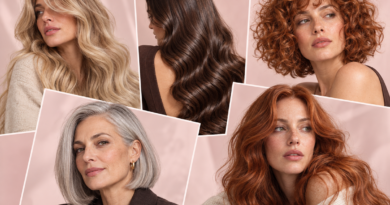
Clean, intentionally styled hair has more influence on overall polish than an elaborate hairstyle. A smooth ponytail, deliberate natural texture or well-shaped bob can all look refined. Hair that appears accidental rarely does, however expensive the cut may have been.
Inspect the clothes as objects
Once an outfit is on the body, people tend to assess whether the colours and proportions work and stop looking at the condition of the individual garments. The five-minute check reverses that habit.
Begin with the neckline and shoulders. Straighten the collar, lapels and scarf, then remove hairs, dust and fibres from the top of the jacket or coat. These areas sit close to the face and are among the first details another person notices.
Continue to the front of the outfit, particularly the places most likely to collect food, make-up or deodorant marks. Natural daylight is unforgiving but useful. A stain that is almost invisible in a softly lit bedroom may become conspicuous outside.
Run your eye over the fabric rather than merely checking for dirt. Pilling, pulled threads and a fallen hem can make good-quality clothing look neglected. A fabric comb, lint roller and small sewing kit will preserve more of a wardrobe’s value than repeatedly replacing pieces that have not been maintained.
Cuffs require particular attention because pale shirts, knitwear and coats collect visible wear there. The inside edge of a collar can create the same problem. These are not glamorous details, but they are precisely the details through which care becomes apparent.
Finally, look at creasing. Linen and certain relaxed fabrics are expected to crease as they are worn; a crushed placket, folded hem or heavily wrinkled trouser leg at the beginning of the day is different. A handheld steamer makes correction easier, although pressing clothes the evening before is more reliable on a rushed morning.
Check the fit from every direction
A mirror shows only the angle you give it. Before leaving, look from the front, side and back, then sit down once if the outfit is intended for work, lunch or an event where you will be seated.
This reveals gaps between buttons, a skirt that rises substantially, trousers that pull across the hips and underwear lines that were not visible while standing. It also shows whether the jacket remains balanced when closed and whether the length of a top works with the chosen waistband.
Fit is not a demand for a particular body shape. It is a question of whether the garment can perform its intended function without requiring constant adjustment. Clothes that need to be pulled down, held closed or rearranged after every movement undermine composure because they keep drawing your attention back to your body.
The full-length check should include proportion. Decide whether the outfit needs one point of definition, such as a visible waist, a shorter jacket or a more substantial shoe. Equally, notice when too many separate focal points are competing. Polished dressing usually has a hierarchy: one strong feature, supported by quieter choices.
The answer is not automatically to add a belt, jewellery or a scarf. Sometimes the most useful adjustment is removing one element.
Shoes and bags reveal maintenance quickly
People may not consciously inspect shoes, yet worn heels, damaged toes and dirt around the soles register as signs that the outfit was not fully considered. Clean the upper, wipe the edge of the sole and check that heel tips are intact. A cobbler can often restore a well-made pair before the damage becomes permanent.
It is useful to keep a small cleaning cloth near the door because shoes frequently acquire marks between the wardrobe and the moment they are worn. Weather also matters here: polished suede is not a sensible choice when heavy rain is expected, regardless of how well it completes the outfit.
Handbags deserve a similar assessment. Look at the corners, handles and closure, then remove receipts, wrappers and unnecessary weight. A structured bag loses much of its effect when overfilled, while a soft bag becomes inconvenient when every essential has disappeared beneath accumulated clutter.
The contents should support the day rather than prepare for every imaginable problem. Lip balm or the lipstick being worn, a compact mirror, hand cream, tissues, a stain-removal pen, a nail file and one or two small plasters will resolve most minor grooming emergencies. A charger, pen and essential medication may be more valuable than a large cosmetic case.
Carrying fewer items also protects the bag’s shape and makes moving through security checks, meetings and public transport more composed.
Treat fragrance as part of the shared environment
Perfume is experienced not only by the wearer but by everyone entering the same lift, office, car or dining room. The appropriate amount is therefore influenced by setting, projection and the sensitivity of those nearby.
A discreet application is usually more sophisticated than leaving a noticeable trail in an enclosed professional space. This is not simply a question of taste. Fragranced products can trigger symptoms for some people with asthma or other respiratory sensitivities, and workplace health authorities have documented fragrance-related occupational asthma.
Apply less when travelling by air, attending a medical appointment, working in a small shared office or meeting someone whose preferences you do not know. A powerful fragrance can still be enjoyed socially or outdoors, but it should be chosen deliberately rather than sprayed by habit.
Fragrance is also not a substitute for clean clothing, deodorant or freshly washed hair. When those fundamentals are in place, perfume becomes a finishing detail rather than an attempt to conceal something.
Nails need care more than colour
A polished manicure can look elegant, but chipped polish is often more distracting than bare nails. When there is no time to repair it properly, removing the colour is usually the better choice.
Keep the nails clean, shaped and smooth enough that they do not catch on fine fabrics. Cuticle oil or hand cream can make hands appear maintained without requiring a salon appointment or complicated nail design.
The principle applies throughout the routine: visible care matters more than decorative effort. Clear polish, short natural nails and moisturised hands can look more refined than an elaborate manicure that has begun to deteriorate.
This is also one of the easiest areas to maintain preventively. A nail file and hand cream in the bag allow small problems to be corrected before they worsen.
Correct posture without becoming rigid
The final physical check is not an accessory but the way the outfit is carried.
Stand with the head balanced rather than pushed forward, shoulders relaxed rather than pulled severely backwards and weight distributed evenly. Good posture should create openness and ease, not the appearance of someone holding a military pose.
Walking matters as much as standing. Shoes should allow a natural stride, while the bag should not be so heavy that one shoulder rises to compensate. A coat that restricts the arms or a skirt that changes the way you walk may not be serving you, however attractive it appears when stationary.
Research into first impressions suggests that people draw trait judgements not only from faces and clothing but from gait and whole-body presentation. Again, those judgements can be simplistic, but posture influences more than other people’s perception: it affects breathing, projection and how physically available you feel during an interaction.
Take one breath before opening the door. Lower the shoulders, release the jaw and let the arms hang naturally. This does more for presence than adding another accessory.
Finish with intention, not self-criticism
A grooming routine becomes counterproductive when every mirror is used to search for evidence of inadequacy. The purpose of the final check is to remove distractions and then stop thinking about appearance.
Ask one useful question: What impact do I need to make today?
The answer might be calm and competent in a difficult meeting, approachable at a community event, discreet at a formal lunch or energetic during a presentation. This is more practical than trying to look generically “elegant”, because it connects appearance with behaviour.
If the intention is authority, that may mean reducing nervous adjustments, speaking more slowly and allowing a jacket or structured knit to create a clear line. If the objective is warmth, it might mean a softer expression, an open neckline and making sure the outfit does not feel so precious that it creates distance.
The clothing does not produce the impact by itself. It removes visual friction and supports the way you intend to behave.
Once the check is complete, leave the mirror. Polish works best when it is noticed as coherence rather than effort: the hair, clothing, shoes, posture and conduct appear to belong to the same person and the same occasion.
The five-minute order
On an ordinary morning, the complete routine can be reduced to a reliable sequence.
First, check the weather and the practical demands of the day. Next, inspect the face and hair from close range and then from a distance. Straighten the neckline, remove lint and examine the front, cuffs and hems of the clothes. Use a full-length mirror to assess fit from several angles, then check shoes, handbag and the few items needed for maintenance during the day.
Finish by correcting posture and deciding what you want to communicate when you enter the first room.
None of these actions requires a new wardrobe. In fact, the routine often reduces unnecessary spending because it shifts attention from acquiring clothes to maintaining and using them well. A garment that is steamed, repaired and properly coordinated gains another life; a bag that is cleaned and not overloaded keeps its shape; shoes resoled at the right time remain wearable for years.
Personal polish is frequently described as instinct, taste or access to expensive things. In daily life, it is far less mysterious. It is a collection of small standards, practised often enough that they eventually require only a glance.