Forget Louis Vuitton – Joseph Duclos Is The French Handbag House To Know
There comes a point in a handbag lover’s life when recognition is no longer the main attraction. The monogram that once made a purchase feel special begins to look overly familiar. The latest waiting-list bag feels less like a discovery and more like participation in a well-organised marketing exercise. What becomes interesting instead is the object itself: the leather, the clasp, the balance of the proportions and the pleasure of carrying something that does not announce its price before the woman wearing it has entered the room.
Joseph Duclos belongs to this more considered category of luxury. The revived French house makes bags with serious materials, sculptural hardware and remarkably little concern for instant brand recognition. Its designs are discreet in the sense that they are largely logo-free, but they are not anonymous. A Joseph Duclos bag has presence. The metalwork is distinctive, the leather is designed to develop character and the shapes often draw on historical cases, saddlery and ceremonial details rather than the familiar language of contemporary It bags.
Prices are firmly within top-tier luxury territory, so this is not a clever route to obtaining an inexpensive alternative to Hermès or Louis Vuitton. It is a different proposition: a bag for the woman who wants craftsmanship and individuality, and is prepared to accept that comparatively few people will know what she is carrying.
The Name Is Historic – The Modern House Is New
The Joseph Duclos story begins in Lectoure in south-west France, where a leather manufactory established by Joseph Duclos received royal recognition from Louis XV in 1754. It became known for its leather production, but the business did not continue uninterrupted as the handbag maison we see today. That distinction matters. Joseph Duclos has genuine historical roots, but its present incarnation is a modern revival rather than an unbroken luxury-house lineage.
French entrepreneur Franck Dahan revived the name in 2021 and brought in Ramesh Nair to shape its new identity. Nair is an important part of the proposition. Before Joseph Duclos, he worked for years at Hermès and was later chosen to revive Moynat, giving him unusually relevant experience in translating archival references into contemporary leather goods.
The business remains closely associated with Dahan rather than sitting within one of the large luxury conglomerates. For a customer, that independence can be part of the appeal. The collections feel authored rather than assembled to fill every possible commercial category. Production is limited, distribution is controlled and there is less pressure to place a recognisable logo on an endlessly expandable range of products.
There is another side to that independence. A smaller house cannot offer the worldwide boutique network, mature resale market or decades of modern customer history available from the largest brands. Buying Joseph Duclos therefore requires more conviction in the bag itself. You are not simply purchasing the reassurance of a famous name.
Why The Bags Look Different
The first thing to understand is that Joseph Duclos is not minimalist in the manner of The Row. Its bags may lack logos, but they often contain elaborate details: engraved clasps, polished metal plates, contrasting leather linings, moulded forms and decorative straps inspired by traditional passementerie.
The Diane, the house’s signature design, is instantly recognisable once you know it. Its closure is an elongated piece of metalwork influenced by historical ceremonial dress and the imagery of Diana, the goddess of the hunt. It gives the bag a slight tension: feminine but not delicate, historical but not costume-like.
Leather is equally central to the design. The house uses several finishes with very different personalities. Héritage is an unfinished full-grain calfskin intended to reveal natural markings and develop a visible patina. Tempo offers the same sense of substantial leather in a somewhat more controlled finish. Symphonie is structured, waxed and vegetable-tanned, while Arpège is a velvety nubuck that becomes shinier where it is repeatedly handled.
These are not necessarily the best bags for someone who wants leather to remain visually untouched. Many Joseph Duclos finishes are meant to record use. That can be beautiful, but only when the owner understands what she is buying. A scratch on unfinished leather is not always a defect; equally, no one should spend several thousand euros on a bag while secretly wishing it behaved like coated canvas.
The construction has substance too. A Diane L20 weighs around 580g, but the larger L26 is listed at just over 1kg before anything is placed inside it. The Diane Messenger weighs approximately 920g. That weight helps explain why the bags feel imposing, but it is also something to consider carefully if you tend to carry a phone, wallet, keys, glasses, cosmetics and a diary all day.
The Diane Is The One To Know
For a first introduction to the house, the Diane is the obvious place to start. It has the most recognisable Joseph Duclos codes and is available in several sizes, from a very small L15 to the significantly more capacious L30, as well as a messenger format.
The L20 is perhaps the most appealing visually. At approximately 20cm wide, it is compact enough to retain the bag’s architectural quality but large enough for a phone, small wallet, keys and a restrained cosmetic edit. It currently costs around €6,100 in Tempo leather and approximately €7,100 in Héritage, depending on the exact edition and finish.
It works best for a woman who already knows she can live with a compact handbag. It is not a disguised work tote and will not suddenly become practical because the price is high. Its beauty lies partly in its proportions.
The L26 is a more functional daytime choice. At around 26cm wide, it can accommodate more without becoming oversized, but the additional leather and hardware increase the weight. In Héritage leather, current versions are priced at approximately €7,700. It is the stronger choice for a woman who wants to carry the bag regularly rather than reserve it for lunches, meetings and evening events.
The Diane Messenger is less formal and may be the easiest version to integrate into a contemporary wardrobe. Taylor Swift carried one with a pleated miniskirt, knit and loafers in New York, which demonstrated something useful about the design: despite its history and ornate clasp, it does not require a tailored coat or evening dress to make sense. It can look just as convincing with polished everyday clothes.
The Messenger measures approximately 24cm by 17cm and is designed to be worn on the arm or shoulder. At around €6,100, it remains a substantial purchase, but it offers more daily practicality than the smallest top-handle versions.
The Fontélie Is The Softer Everyday Option
The Fontélie is likely to appeal to a woman who appreciates the workmanship of the Diane but finds its structured silhouette too ceremonious. It has a softer, more relaxed body and a distinctive clasp resembling a stamped wax seal.
Made in full-grain Concerto leather, the bag has a more understated manner. It does not look as obviously engineered as the Diane, which can make it easier to wear with a trench, knitwear, denim or a softly tailored suit. Current versions are priced at approximately €4,300, placing it below the Diane but still squarely within serious luxury territory.
This may be the most convincing Joseph Duclos choice for someone who wants one bag to use repeatedly. The shape is more forgiving, the design less formal and the price, while high, does not carry quite the same premium as the house’s most elaborate construction.
Its understated appearance also makes the quality of the leather more important. With no monogram and less dominant hardware, the success of the bag depends on proportion, touch and finish. It is therefore a design worth seeing in person rather than judging entirely from studio photography.
The Saint-Clair Has More Character – And More Compromises
The Saint-Clair draws on the form of 18th-century royal cases. It has rounded edges, contrasting textures and a precisely engraved closure, with versions combining structured Symphonie leather and softer Arpège nubuck.
It can be carried by its detachable top handle or shoulder strap, giving it useful versatility, while the curved shape has a slightly more eccentric quality than the Diane. At approximately 20cm wide and 10cm deep, it is compact but not entirely impractical. Current versions are around €5,600.
The nubuck is central to its appeal but also its main vulnerability. Arpège leather has a soft, tactile surface and is intended to develop sheen where it experiences friction. That ageing process may look rich and personal to one owner, and uneven to another. Pale versions will inevitably require greater care around denim, hand cream, make-up and wet weather.
There are also Saint-Clair clutches, including a version formed from a single piece of vegetable-tanned Symphonie leather. Priced at roughly €3,500, it demonstrates some of the house’s most interesting leatherworking, including wet moulding and hand-finished corners. Yet its relatively narrow depth makes it more of a beautiful personal object than an all-purpose daily bag.
Who Actually Carries Joseph Duclos?
The name received considerably more public attention when Taylor Swift was photographed carrying the Diane Messenger in 2024. Her choice was interesting because the bag did not feel like a conventional celebrity placement. It was worn as part of a relatively restrained daytime look and seemed to belong to the outfit rather than dominate it.
That is how Joseph Duclos is most convincing. Its bags work on women whose wardrobes already have a point of view. A Diane with a beautifully cut coat, flat loafers and tailored trousers looks assured. So does a Saint-Clair worn across a cashmere knit and straight-leg jeans. The design becomes less successful when treated as an isolated trophy purchase.
Celebrity visibility should not be confused with an established circle of famous long-term owners. Joseph Duclos remains a young modern maison with far fewer documented sightings than major luxury houses. That relative scarcity is appealing, but it also means buyers should be wary of social-media lists that describe every photographed appearance as organic ownership.
The useful question is not whether enough famous women own one. It is whether the design would still interest you if nobody recognised it.
Is It Really Quiet Luxury?
Joseph Duclos is often placed within the quiet-luxury category because its bags avoid monograms and remain unfamiliar to most observers. Yet “quiet” is not quite the right word for every design.
The Diane clasp is ornate. The metalwork catches the eye. Certain colours, leather finishes and decorative straps are unapologetically expressive. These are not featureless bags designed to disappear into a tonal wardrobe.
A better description would be under-recognised luxury. The bags possess a strong identity without broadcasting a widely known brand code. Someone familiar with leather goods may recognise a Diane immediately; most people will simply see a beautifully made, unusual handbag.
That distinction matters because a woman seeking The Row-style visual restraint may find the hardware too decorative. A woman who wants something distinctive but dislikes logos may consider it exactly right.
Which Leather Should You Choose?
For a first Joseph Duclos bag, the practical decision is not simply between black and brown. The leather finish will determine how relaxed you can be while carrying it.
Héritage has the greatest character. It is unfinished full-grain calfskin, meaning natural variation remains visible and the surface will develop patina through touch, light and use. It is the choice for someone who enjoys the way leather ages and does not interpret every mark as damage.
Tempo may be the easier route into the Diane. It retains the richness of full-grain leather but appears slightly more controlled, making it better suited to a woman who wants the bag to age gracefully without becoming visibly distressed too quickly.
Symphonie is firmer and more architectural. Its structure makes it appropriate for designs that need to hold a precise shape, while its waxed, vegetable-tanned surface should develop depth over time.
Arpège is the least carefree. Its velvety nubuck texture is beautiful, but it will react to friction and may be more vulnerable to colour transfer, moisture and oily products. It is best for an experienced handbag owner who understands that tactile leather often requires more thoughtful handling.
A delicate finish is not evidence of poor craftsmanship. It is simply a poor purchase for someone who needs a bag to survive train floors, sudden rain and an uncapped lipstick without consequence.
The Best Colours Are Not Necessarily Black
Black may appear to be the safest investment, but it can obscure some of Joseph Duclos’s most interesting details. Deep chestnut, aubergine, slate blue, forest green and muted red allow the grain and metalwork to become more visible without making the bag difficult to wear.
The right choice depends on the wardrobe it will enter. A woman who lives in navy, grey, white and cool pink may find slate blue, aubergine or a blue-based red more versatile than camel. Someone whose wardrobe is built around cream, chocolate, olive and tobacco will probably use chestnut or dark brown more often than black.
Hardware matters too. A bag should sit comfortably beside the jewellery and shoe details you already wear. There is little sense in choosing a warm brown bag with elaborate metalwork if every belt, loafer and piece of jewellery in your wardrobe feels cooler and sharper.
For an expensive purchase, take photographs of the bag in natural light and compare them with your most frequently worn coats. The right colour should improve your real wardrobe, not the imagined wardrobe of a woman who spends every afternoon in Paris.
What To Check In Person
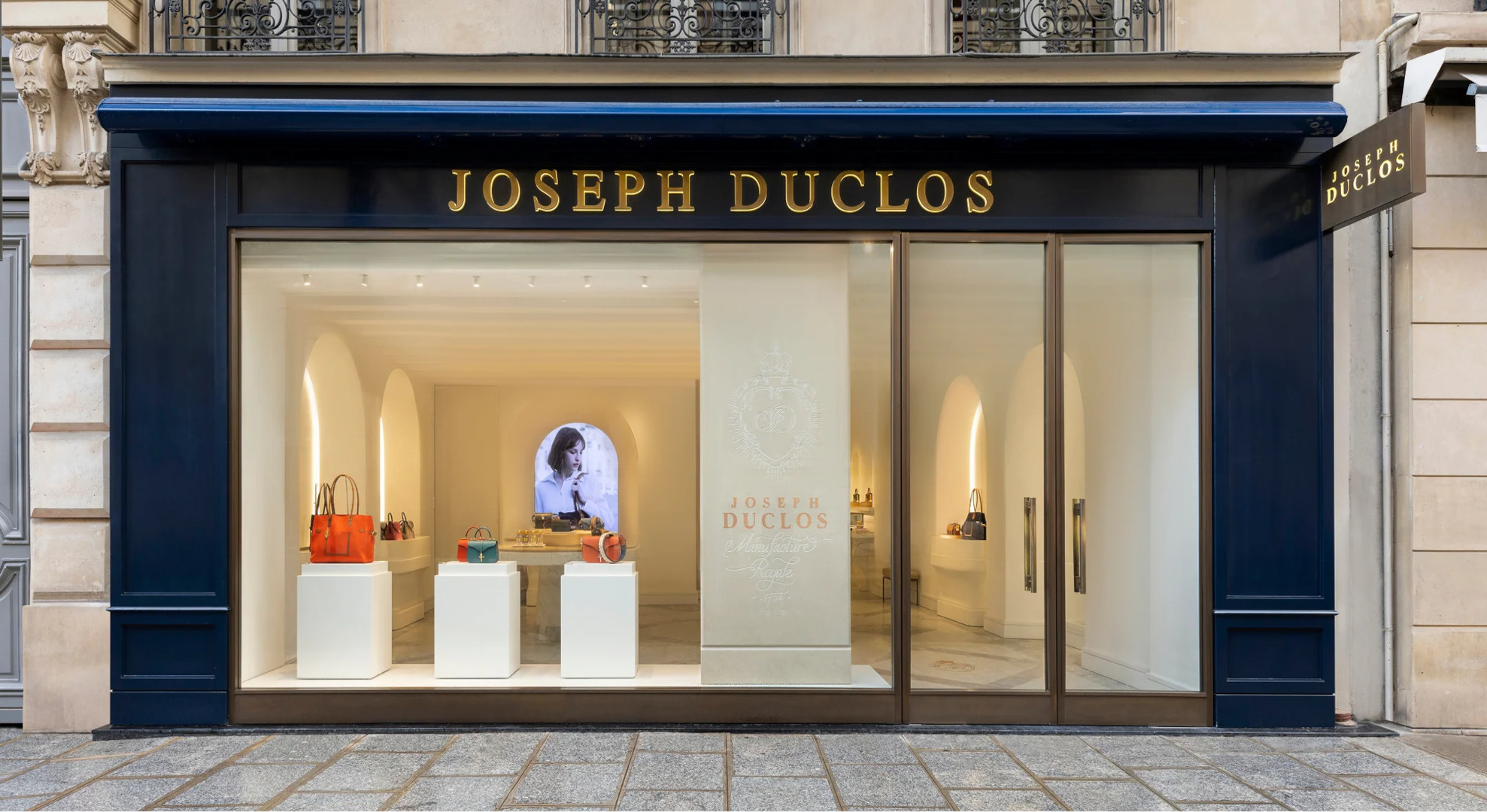
Joseph Duclos has a Paris boutique at 54 Rue du Faubourg Saint-Honoré, and this is a house that particularly rewards an in-person visit. The physical experience matters: the scent and surface of the leather, the tension of the clasp, the weight of the hardware and the way the bag sits against the body cannot be understood fully online.
Open and close the bag several times. Try doing it with one hand. Place your phone, wallet, sunglasses and keys inside rather than relying on dimensions alone. Carry it with a coat, not just over a lightweight top. Check whether the strap length works with your height and whether the empty weight already feels substantial.
Look at the interior too. Joseph Duclos often uses leather linings rather than fabric, which adds richness but also weight. Examine the edge finishing, the alignment of the hardware and the way the bag sits when placed on a table.
Most importantly, ask how the exact leather should age. A good sales adviser should be able to explain which changes are expected, what can be treated and what should be avoided. Ask about repairs, replacement straps and long-term maintenance before purchasing, not after the first mark appears.
What About Resale?
Joseph Duclos should not be bought on the assumption that rarity automatically creates investment value. A product can be exceptionally made and still lack a liquid resale market.
The brand has growing recognition among handbag enthusiasts, but it does not yet have the broad secondary-market demand of Hermès, Chanel or Louis Vuitton. Listings may be scarce, which can be interpreted as limited supply, but it also means there are fewer completed sales from which to establish reliable values.
For a woman who changes bags frequently and expects to resell within two or three years, this is a material disadvantage. She may recover less of the original price and wait longer for the right buyer.
For a woman buying the bag to use for a decade, resale becomes less decisive. The value lies in selecting a design she genuinely enjoys, caring for it and allowing the leather to become personal. That is a more convincing reason to buy Joseph Duclos than the hope of future appreciation.
How It Compares With Other Discreet Houses
Compared with Hermès, Joseph Duclos offers far less recognition and resale security, but potentially more freedom to choose a bag without navigating the culture surrounding store relationships and purchase histories.
Compared with Delvaux or Moynat, it is younger in its modern form and less widely distributed, although Ramesh Nair’s experience gives the design language considerable authority.
Valextra is cleaner and more urban. The Row is more minimal. Launer has a distinctly formal, establishment quality. Métier prioritises sophisticated utility, while Savette offers a lighter, fashion-led interpretation of restrained luxury.
Joseph Duclos is strongest when judged as decorative French leatherwork. The bags feel historical without being replicas and luxurious without depending on a famous logo. They are less persuasive when assessed solely through practicality, lightness or resale performance.
Is It Worth The Money?
The answer depends on what you believe a luxury handbag should do.
A Joseph Duclos bag makes sense for a woman who is tired of buying recognition, understands the behaviour of natural leather and wants an object that remains slightly outside the mainstream. She is prepared to inspect the construction, consider the weight and accept that the bag may develop marks rather than remain permanently pristine.
The Diane L20 is the purest expression of the house, but the L26 or Messenger will be more usable for many women. The Fontélie is the most relaxed everyday option, while the Saint-Clair suits someone drawn to tactile materials and slightly unusual shapes.
It is less suitable for a buyer who wants guaranteed resale, a globally available repair network or a lightweight bag she can use without thinking. At these prices, those are not insignificant reservations.
The most sophisticated reason to move beyond Louis Vuitton is not the pleasure of possessing a brand fewer people know. Obscurity can become just another form of status seeking. The better reason is that you have learned to look more closely. You notice whether the leather is full grain, whether the clasp works easily, whether the bag feels balanced and whether its design still interests you once the name is removed.
Joseph Duclos will not be the right house for every woman. That is precisely why it remains interesting.