Why Fashion Designers Are Moving into Interiors
Victoria Beckham’s new tableware collection for Westwing is the latest collaboration bringing fashion into the home. From designer ceramics to furniture and lighting, fashion’s influence on interiors is extending beyond familiar logos, with brands translating their approach to materials, colour and craftsmanship into objects designed to last.
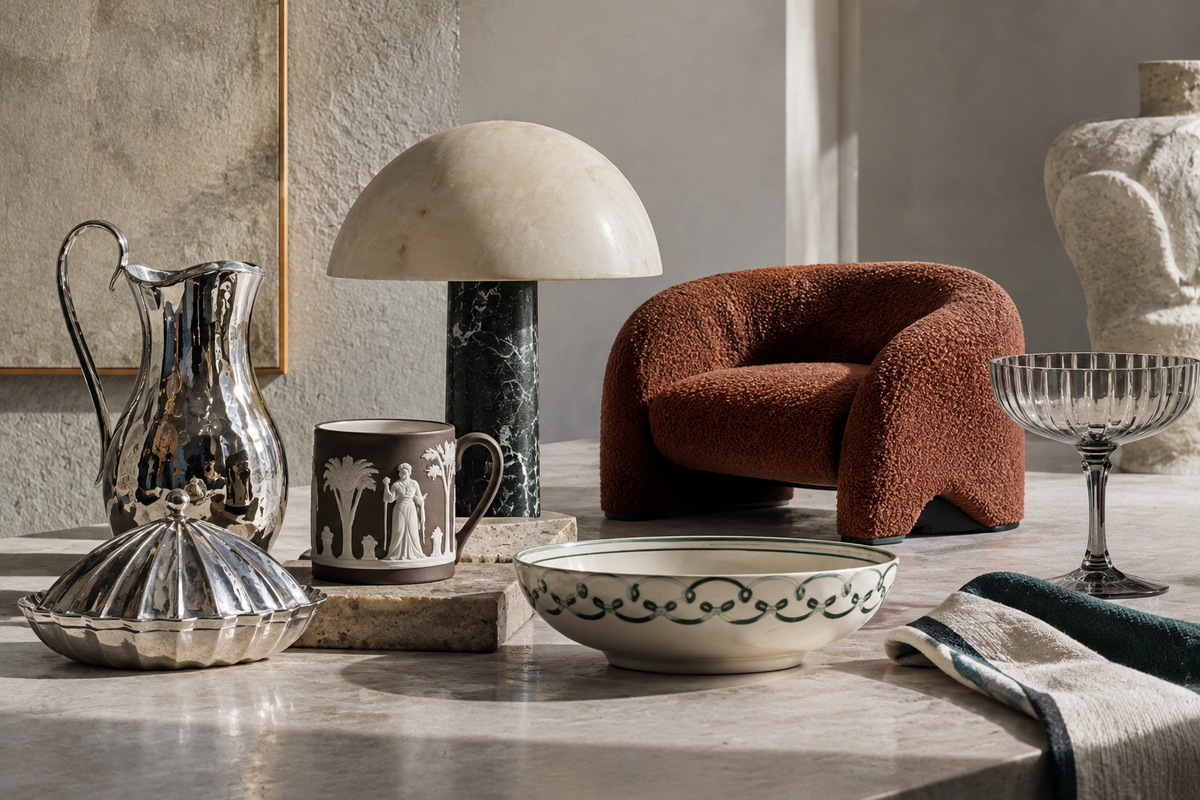
Victoria Beckham’s first homeware collection arrived in October with hammered metal cutlery, sculptural napkin rings and a shell-shaped butter dish. Created with German interiors retailer Westwing, the range draws on the designer’s established fashion vocabulary: chain motifs borrowed from jewellery, restrained silhouettes and a palette of white, silver and hunter green. The pieces are intended to work together on a dining table, although several have a decorative purpose beyond entertaining.
Beckham has chosen a relatively contained introduction to interiors. The collection, launched on 12 October 2026, concentrates on tableware, textiles and small decorative objects rather than furniture or complete room schemes. Westwing supplies the product-development, retail and distribution infrastructure, while Beckham contributes the design direction and a recognisable identity. The partnership also arrives during Westwing’s expansion in Britain, where the Munich-based company launched its business earlier this year.
Fashion designers have been entering the interiors market for decades, although recent collaborations have become more varied. Some brands commission furniture manufacturers to translate established design codes into domestic products. Others work with ceramic makers, artists and architects whose skills lie outside clothing. A label can now extend into homewares without establishing an independent furniture business, while specialist manufacturers gain access to customers who already follow the designer’s work.
From jewellery to the dining table
Westwing and Victoria Beckham have described their collaboration as a modern interpretation of fashion for the table. Its references are identifiable in the products themselves. Chain-link detailing appears on plates and bowls, while hammered finishes and organic shapes draw on the Arts and Crafts movement. The restrained colour scheme allows the metalwork and sculptural forms to carry much of the decoration.
The collection also reflects a change in how fashion labels approach smaller household objects. Tableware provides a relatively accessible route into a designer’s aesthetic, particularly when compared with purchasing a piece of furniture. A sculptural butter dish, distinctive glassware or a set of napkin rings brings a recognisable design into an existing interior without requiring major changes to the room.
Beckham’s collection includes objects that sit between practical tableware and decoration. The hammered butter dish doubles as a container for small personal items, while the coupe glasses and textured pieces have been designed with entertaining in mind. Their commercial appeal rests partly on the possibility of using them outside their original purpose.
The arrangement gives Westwing a designer collaboration with broad recognition while allowing Beckham to enter a different product category through an established interiors business. Westwing reported gross merchandise volume of €507 million in 2025 and operates across 28 European countries. Its retail network, online platform and existing supplier relationships provide a distribution structure that a fashion label entering homewares independently would need to develop.
Jonathan Anderson looks to ceramic history
Jonathan Anderson’s collaboration with Wedgwood approaches the relationship between fashion and interiors through the history of design. The British ceramic manufacturer has worked with Anderson on a limited-edition collection that draws on pieces from his personal collection and the company’s own heritage.
The latest range includes mugs inspired by fifth-century Greek ceramics, reinterpreted in Wedgwood’s Jasperware. Their ribbed surfaces and contrasting colour combinations give familiar vessels a more sculptural appearance. Pairs of mugs are offered in combinations including dark brown and terracotta, pale greens and blue tones.
The partnership also revisits work by Austrian-born British ceramicist Lucie Rie, whose designs for Wedgwood included pieces that never entered production. Anderson’s involvement connects the manufacturer’s archive with a contemporary designer who has consistently drawn inspiration from craft, art and historical objects.
Wedgwood supplies the ceramic knowledge and manufacturing techniques, while Anderson selects references and determines how they are reinterpreted. The resulting objects retain the material character of Jasperware rather than attempting to reproduce the appearance of a fashion accessory.
Their price reflects that positioning. Wedgwood lists pairs of the Anderson mugs at £300, placing them closer to collectable design objects than ordinary kitchenware. The buyer is paying for the design, the manufacturing process and the association with two established creative names.
Fashion collaborations of this kind introduce historical craftsmanship to audiences who may have encountered the designer through clothing first. The products also have a different commercial lifespan from seasonal fashion collections. A ceramic vessel remains in use long after the season in which it was introduced, and limited production can add to its appeal among collectors.
Fashion brands build entire interiors businesses
Giorgio Armani and Fendi demonstrate how far the relationship between clothing and interiors has developed. Both established dedicated home divisions long before the latest wave of designer collaborations.
Fendi entered interior design in 1987, extending its work with leather, textiles and decorative materials into furniture. Fendi Casa now operates through a partnership with Design Holding, which provides manufacturing and commercial expertise in high-end interiors. Its collections cover upholstery, furniture, lighting, textiles and outdoor pieces.
The products draw on manufacturing skills associated with the fashion house, particularly leatherwork and elaborate material treatments. Upholstered furniture allows those techniques to appear on a larger scale, while decorative accessories carry familiar patterns and finishes into smaller objects.
Armani/Casa has developed a more comprehensive interiors business. Its collections concentrate on proportion, subdued colours, refined finishes and carefully selected materials, closely following Giorgio Armani’s established visual language. The company also operates an interior design studio, founded in 2004, which works on private residences, yachts and residential developments.
Its projects include the interiors of residential buildings in Miami, Istanbul and Tel Aviv. These commissions extend the brand’s influence from individual products into the architectural experience of a building, including public areas, private residences and furnishing schemes.
Such businesses require capabilities that differ from clothing production. Furniture must meet structural and durability requirements, upholstery involves specialised manufacturing and large pieces create demanding transport and installation arrangements. The fashion house provides creative direction and brand recognition, while established design manufacturers and contractors handle much of the technical work.
Zara takes a different approach
The collaboration between Zara and film director Luca Guadagnino, working with architect and production designer Stefano Baisi, demonstrates how retailers are expanding the relationship between fashion, interiors and other creative disciplines.
Launched during Milan Fashion Week in September 2026, their collection spans approximately 200 pieces, including furniture, lighting, home accessories, clothing and fragrances. The project brings the design language of Guadagnino’s films and architectural work into products intended for domestic use.
Guadagnino and Baisi have drawn on Italian modernism, Art Deco and other historical influences, translating those references into sculptural furniture, patterned textiles and unusually shaped objects. The collection includes large sofas and chairs alongside smaller accessories, allowing customers to buy individual pieces or assemble a more coordinated interior.
The designs vary considerably in price, from inexpensive accessories to furniture costing several thousand pounds. Zara’s retail infrastructure supports a broad assortment that would be difficult for a small independent studio to introduce at the same scale.
Guadagnino’s involvement also shows how the boundaries between creative professions are becoming less rigid. His work in cinema relies on the construction of interiors that communicate character, period and atmosphere. The collaboration translates that experience into furniture and accessories intended to function outside a film set.
The partnership has attracted attention for its references to historical design, including debate surrounding the resemblance between one chair and Josef Hoffmann’s early twentieth-century work. Such comparisons raise questions about how designers use archives and established forms when developing new commercial collections.
What fashion contributes to a room
Fashion and interior design share an interest in proportion, texture, colour and the relationship between an object and the person using it. A designer accustomed to working with clothing understands how materials fold, stretch, reflect light and create volume. Those skills offer a starting point for furniture and household objects, although they do not replace the technical requirements of product design.
Textiles provide the clearest connection. Upholstery, curtains, rugs and bedding involve choices of weave, weight, pattern and finish familiar to fashion designers. Leather goods offer another route into interiors, particularly when manufacturers adapt stitching, embossing and surface treatments to furniture.
Colour is equally transferable. Designers develop palettes across seasonal collections, learning how particular shades interact with different materials. Applied to interiors, the same sensibility influences the relationship between upholstery, ceramics, metal finishes and decorative objects.
The differences emerge through use and durability. A garment is designed around movement and fit, while a chair must support repeated use over many years. Ceramic tableware needs to withstand cleaning and handling, and lighting requires electrical safety and suitable construction. Established homeware manufacturers therefore play a central role in translating a fashion designer’s ideas into products that perform reliably.
The most convincing collaborations make that relationship visible. Anderson’s Wedgwood ceramics depend on the manufacturer’s expertise in Jasperware, while Fendi Casa relies on specialist furniture production. Westwing brings Beckham’s references into a coordinated tableware collection that can be distributed through an existing European retail business.
The commercial attraction of the home
Homewares also give fashion brands a different relationship with their customers. Clothing collections follow seasonal calendars, while furniture and decorative objects have longer replacement cycles. A household purchase remains visible for years, extending the presence of a brand beyond the wardrobe.
Small decorative products offer another commercial advantage. Ceramics, textiles, table accessories and fragrances reach customers who admire a designer’s style but do not regularly purchase its clothing. They also lend themselves to gifts and collectable limited editions.
Retail partners gain access to an established audience through the designer’s name, while collaborations create new products without requiring retailers to build a permanent fashion-led design department. The arrangement is attractive to both businesses, provided the collection offers enough originality to distinguish it from ordinary branded merchandise.
There are limits to how far recognition alone carries a product. Customers purchasing furniture must assess comfort, construction, dimensions and service life. A familiar label offers little compensation when an object proves unsuitable for the room or performs poorly in everyday use.
Victoria Beckham’s Westwing collaboration illustrates the appeal of starting with smaller pieces, where design identity is easily expressed through shape and finish. Its restrained palette and decorative details also allow the collection to sit within interiors that have no other connection to the fashion label.
As more designers enter the home market, the strongest products will be those that justify their presence through material, construction and use. The brand introduces the object, but the quality of the design determines whether it remains part of the home.