What Fashion Is Keeping from the Spring 2027 Shows
The Spring 2027 collections in Milan and Paris placed renewed attention on how clothes are constructed, how fabrics move and how familiar garments adapt to different occasions. Designers approached these questions through lighter tailoring, experimental skirts and increasingly elaborate textile work.
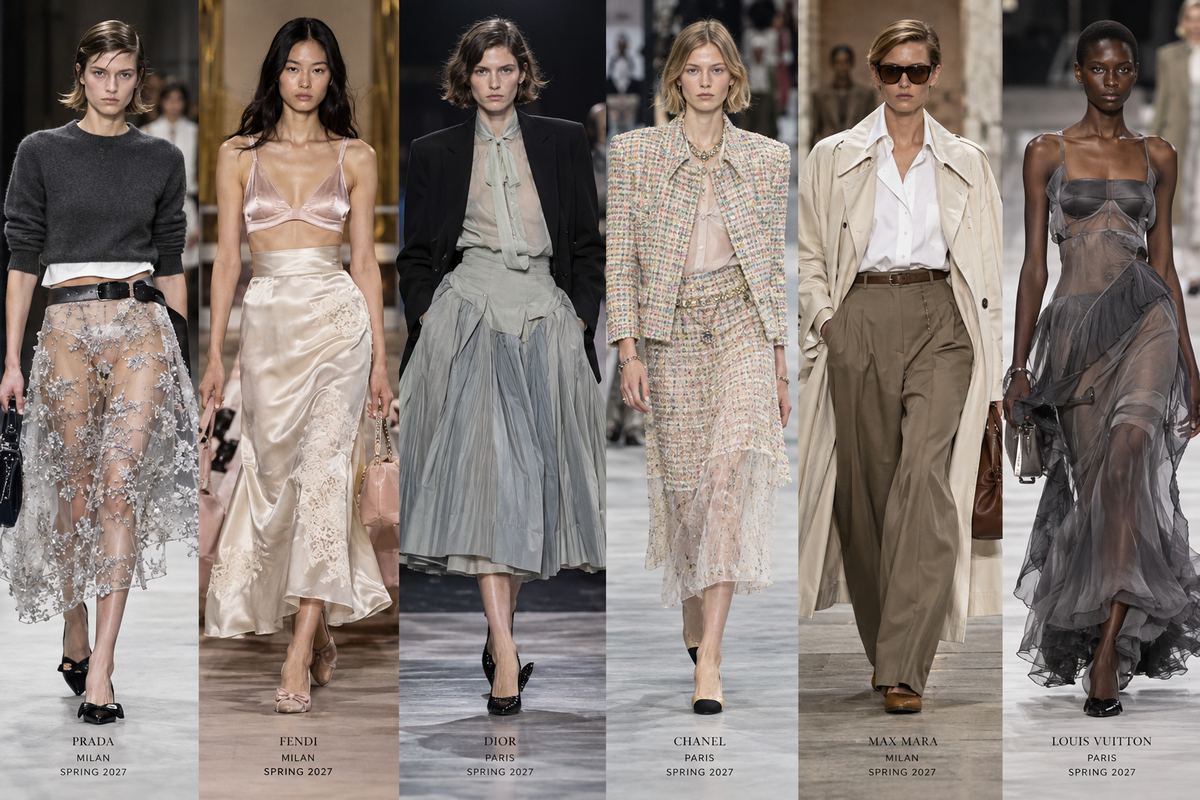
Miuccia Prada and Raf Simons sent 63 skirts down the runway in Milan, each exploring a different way to construct and wear the same familiar garment. Some were made from felt, others from sheer fabric or crystal embroidery. Velcro fastenings allowed wearers to adjust the shape, while pleated skirts expanded beyond the body and were sometimes carried in the models’ hands.
Prada’s Spring 2027 collection treated the skirt as the foundation of the outfit, changing its proportions, materials and relationship with everything worn above it. A plain shirt accompanied an elaborate skirt, while satin bras appeared with more practical versions. The designers used a recognisable silhouette to accommodate different forms of dress, from everyday clothes to eveningwear.
Elsewhere in Milan and Paris, designers were reconsidering the construction of jackets, coats and dresses. Heavy fabrics gave way to organza, fine silk and transparent layers, while traditional tailoring appeared in softer forms. Leather, meanwhile, became a material for intricate surface treatments rather than conventional outerwear alone.
The collections offered several directions that extend beyond seasonal colours or decorative trends. Their strongest ideas concerned garments women already own, with changes to fit, weight and construction giving those pieces a different appearance.
The skirt takes a new position
Prada’s collection provided the clearest example of a designer building an entire wardrobe around one garment. The skirts retained a broadly recognisable shape but varied in length, volume and construction. Some were held together with conspicuous fastenings, while others incorporated crinoline, normally hidden inside a garment, as a visible structural element.
Industrial fabrics appeared in forms traditionally associated with dressmaking. Re-Nylon was pleated, cotton was treated to resemble leather or suede, and crystal embroidery imitated lace. Rather than concealing technical components, Prada incorporated them into the finished design.
The adjustable fastenings were especially practical. Different ways of closing a skirt altered its shape and exposed or concealed decorative details, giving one piece several appearances.
Fendi approached the season through the relationship between underwear and outer clothing. Maria Grazia Chiuri drew on Italian performer Raffaella Carrà, incorporating lingerie-inspired pieces, satin and lace into silhouettes with a strong reference to the 1970s. Elsewhere, slips and bras appeared under oversized shirts or as visible components of everyday outfits.
The styling will be easier to adapt than some of the runway garments themselves. Skirts with a defined waist, unusual pleating or carefully controlled volume offer a way to change proportions without rebuilding an entire wardrobe. A simple knit or shirt leaves the construction of the skirt to carry the look.
Tailoring loses weight
Jonathan Anderson’s Spring 2027 collection for Dior revisited the house’s structured heritage while reducing its visual weight. Jackets and dresses retained carefully controlled shapes, but their construction allowed more movement than the rigid silhouettes traditionally associated with Dior’s postwar wardrobe.
At Chanel, Matthieu Blazy examined Gabrielle Chanel’s history through lighter fabrics and increasingly flexible tailoring. The collection moved from delicate underwear-inspired pieces towards modern interpretations of the house’s suits, including a newly developed smocked tweed designed to stretch and move with the body.
The textile work was central to the design. Chanel’s familiar tweed no longer relied on the stiffness associated with more traditional versions of the suit. Its lighter construction allowed the fabric to follow the wearer while retaining the visual character of the house.
Celine offered another version of relaxed dressing under Michael Rider. Tailored clothes were accompanied by practical separates, with simple shapes interrupted by pronounced accessories and unexpected colour. Black remained prominent, but brighter elements, including red and yellow, changed the appearance of otherwise restrained outfits.
Louis Vuitton’s Nicolas Ghesquière also worked with lighter materials and fluid silhouettes. Dresses sat close to the body or fell away from it, while fine fabrics gave traditionally architectural shapes a softer appearance. Silk tailoring, draped garments and controlled movement replaced some of the harder structures associated with his earlier collections.
The common direction was visible in how these clothes behaved when worn. Designers retained their house signatures through cut, proportion and fabric development, even as they reduced weight and rigidity.
The trench coat gets another season
Outerwear underwent a similar adjustment in Milan, where designers introduced lighter versions of familiar coats. Max Mara, celebrating its 75th anniversary, presented trench coats with reduced weight and softer construction, accompanied by pieces in organza.
Ferragamo’s Maximilian Davis used a more defined waist, while Sportmax explored sheer fabrics and tailoring with minimal visual bulk. The result was outerwear that preserved the trench’s familiar lines while making it suitable for warmer weather and lighter layering.
At Tod’s, Matteo Tamburini showed a tan trench with a contrasting ivory collar, alongside funnel-neck knitwear, tailored shorts and relaxed trousers. The collection concentrated on garments with clear everyday applications, supported by the leather accessories for which the house is known.
These approaches give the trench a longer role in the seasonal wardrobe. Lighter cotton, softer shoulders and less substantial linings allow the coat to function beyond cool spring mornings. Defined collars, belts and lapels still provide the structure that makes the garment recognisable.
The trench also offers designers a familiar commercial product on which to introduce new proportions. A change in collar shape, fabric weight or waist placement updates the garment while preserving the qualities buyers already understand.
Craft becomes visible
Louise Trotter’s Spring 2027 collection for Bottega Veneta concentrated on the tactile character of clothing. Fine knits, elaborate fringe and leather treatments created garments whose surfaces carried much of the design.
Leather was cut into petal shapes, while other pieces featured dense strands that moved as the wearer walked. Floral fringe fell over garments, producing volume through layers of material rather than heavy construction.
Trotter also used colour to alter familiar combinations. A violet jacket appeared with pink satin trousers, while butter-yellow and other soft shades sat alongside brighter tones. The collection combined Bottega Veneta’s established leather expertise with a more varied approach to ready-to-wear.
Sarah Burton’s Givenchy offered another interpretation of craftsmanship. Lean pinstriped suits, satin tailoring and richly coloured leather dresses reflected her precise handling of cut and fabric. The palette ranged from yellow to deep blue, with colour concentrated in garments that retained a defined silhouette.
Sacai’s Chitose Abe continued exploring garments assembled from contrasting materials. Military-style jackets incorporated decorative surfaces, while satin altered the character of familiar utilitarian shapes. Slashed hems and layered fabrics created movement without abandoning the practical references of the original garments.
Rei Kawakubo took these ideas further at Comme des Garçons, working with denim, padded cotton and mattress ticking to create sculptural pieces. The materials were ordinary, but the construction transformed their shapes and proportions.
Although many of these runway pieces will remain difficult to reproduce in everyday dress, their fabric treatments reveal where designers are concentrating their technical work. Fashion houses are investing in textile development, complex cutting and recognisable craftsmanship at a time when much of the luxury market faces pressure to justify its prices.
Colour moves beyond the neutral wardrobe
Spring 2027 also brought stronger combinations of colour, especially where designers used familiar garments as the foundation.
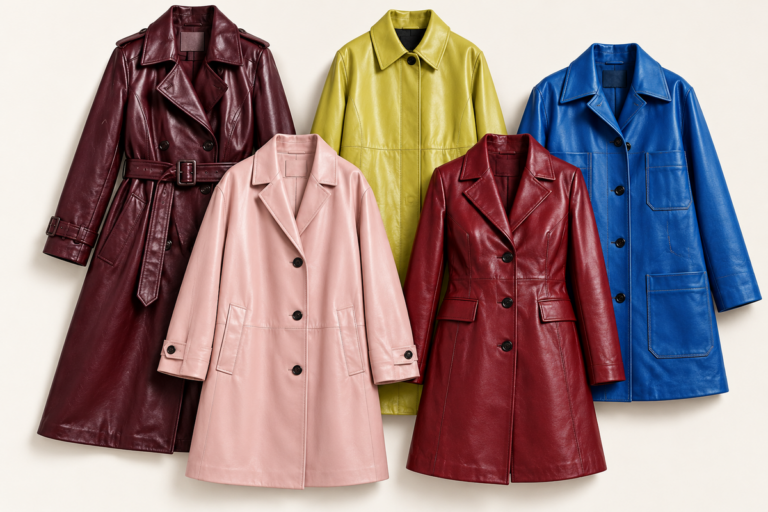
At Loewe, Jack McCollough and Lazaro Hernandez introduced bright leather jackets, relaxed trousers and accessories in pronounced colours. The collection combined practical shapes with saturated hues, allowing the materials and colour combinations to provide much of the visual effect.
Meryll Rogge’s Marni used ochre, brown and other earthy tones alongside heavier belts and pinafore shapes. The effect was more grounded than the transparent fabrics appearing elsewhere in Milan, although the styling retained the eccentricity associated with the house.
Alessandro Michele’s Valentino offered a more elaborate alternative, with decorative eveningwear and saturated colour. His pleated fuchsia finale dress demonstrated how volume, fabric movement and theatrical construction remain central to certain luxury houses despite the wider interest in lighter clothing.
The differences between collections make a single seasonal palette difficult to identify. Soft yellow, pink and lilac appeared alongside vivid red, intense blue and established neutrals. Designers used these shades according to the identity of their houses, rather than converging on one dominant colour.
What reaches the wardrobe
The most adaptable ideas from Spring 2027 are already familiar garments with changes in construction: a skirt with a defined shape, a lighter trench coat, a soft tailored jacket or a dress made from fabric that moves naturally.
Prada’s adjustable skirts and Chanel’s flexible tweeds require sophisticated manufacturing, but the broader design principles are straightforward. Waistlines and fastenings alter proportions, lighter fabrics reduce bulk and carefully placed volume gives a garment structure without adding weight.
The influence of these collections will become clearer as buyers select pieces for boutiques and brands introduce their own interpretations. Some runway experiments will remain distinctive to the houses that developed them, while simpler changes to cut, length and materials will reach a much wider market.
Milan and Paris presented different answers to how luxury clothes ought to look next spring. Prada concentrated on the skirt, Bottega Veneta on material and surface, and Chanel on the technical development of its established tailoring. Across the collections, the strongest designs were those in which the construction explained the appearance of the garment.