
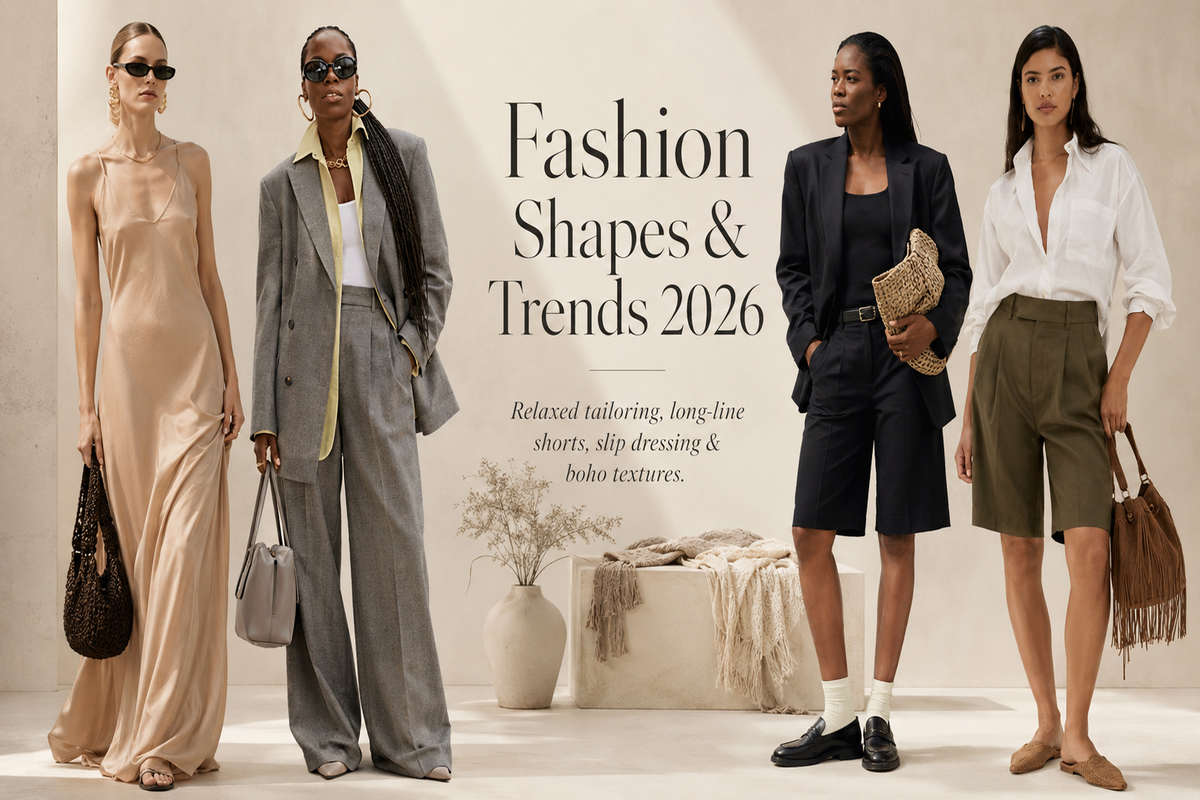
Formy definiujące modę w 2026 roku
Moda w 2026 roku nie skupia się tak bardzo na jednej, dominującej estetyce, ile na proporcjach. Najbardziej przekonujące stylizacje nowego sezonu kształtują dłuższe szorty, bardziej miękki krój, zwiewne spodnie, sukienki inspirowane bielizną oraz bardziej dopracowana wersja stylu bohemy. Nawet jeśli same ubrania wydają się znajome, projektanci i styliści zmieniają sposób, w jaki układają się one na ciele: przesunięto rąbki, marynarki stały się luźniejsze, spodnie zyskały większą objętość, a tradycyjnie kobiece elementy są równoważone przez coś bardziej wyrazistego lub solidnego.
Raport brytyjskiego „Vogue’a” dotyczący trendów na sezon wiosna/lato 2026 opisuje sezon oparty raczej na mieszance kolorów, faktur i zmieniających się sylwetek niż na jednym dominującym, jednolitym stylu, podczas gdy kolejne artykuły wielokrotnie powracały do motywów satyny, koronki i bielizny. Z kolei serwis „Who What Wear” wskazał dopasowane bermudy, spodnie typu balloon oraz dłuższe, luźniejsze dżinsy jako fasony zyskujące w tym roku na popularności. Podsumowując, te doniesienia wskazują na garderobę, która wydaje się bardziej swobodna niż ultra-wyrafinowany minimalizm ostatnich sezonów, ale nadal jest przemyślana.
Oto fasony, o których warto teraz wiedzieć – a co ważniejsze, jak się je faktycznie nosi.
Krój stał się luźniejszy, ale nie stracił swojego kształtu
Krój oversize nie jest bynajmniej nowością, ale zmieniły się proporcje. W przeciwieństwie do celowo ogromnych marynarek i spodni sięgających do ziemi, które dominowały kilka sezonów temu, kroje w 2026 roku wyglądają na swobodniejsze i bardziej wyważone. Marynarki nadal mogą być luźne w ramionach, ale coraz częściej łączy się je z płynnymi spodniami z szerokimi nogawkami, wąskimi topami lub bardziej kobiecymi elementami pod spodem, co zapobiega nadaniu całości zbyt ciężkiego wyglądu.
Tę równowagę widać również w tym, jak redaktorzy modowi traktują ubrania krawieckie jako podstawę garderoby, a nie jako wyrazisty trend. Serwis SheerLuxe zwrócił ostatnio uwagę na eleganckie ubrania krawieckie wśród uniwersalnych podstawowych elementów garderoby, które dyrektor kreatywna spakowała na wyjazd do Londynu, łącząc je z ubraniami zaprojektowanymi tak, by można je było z łatwością nosić na różne okazje. Letnia kolekcja kapsułowa serwisu Who What Wear również zestawia krawieckie bermudy z jedwabnymi koszulkami na ramiączkach i bardziej rzeźbionymi spodniami, zamiast traktować ubrania krawieckie wyłącznie jako strój biurowy.
W codziennych stylizacjach najprostszym rozwiązaniem jest lekko oversizowa marynarka w połączeniu z dopasowaną kamizelką lub cienkim swetrem oraz spodniami, które ładnie opadają od bioder. Kontrast ma tu duże znaczenie. Jeśli zarówno marynarka, jak i spodnie są bardzo obszerne, wąska warstwa pod spodem nadaje stylizacji wystarczającą wyrazistość, dzięki czemu proporcje nie przytłaczają osoby noszącej.
Szorty bermudzkie stały się elementem eleganckiej odzieży
Niewiele elementów garderoby lepiej ilustruje zmianę proporcji niż szorty.
Modna długość zdecydowanie się wydłużyła – bermudy sięgają obecnie do kolan lub nieco poniżej, a wykonane są z dopasowanych tkanin wełnianych, bawełnianych, jedwabnych oraz technicznych. Serwis „Who What Wear” śledził ten trend przez cały rok 2026, opisując nową wersję bermudów jako wystarczająco długą i zwiewną, by plasować się gdzieś pomiędzy tradycyjnymi szortami a spódnicami-spodniami. Najnowsze relacje ze stylu ulicznego z Kopenhagi pokazują, że ten fason utrzyma się również w następnym cyklu modowym, co sugeruje, że nie jest to tylko krótkotrwała letnia nowość.
Atrakcyjność tego modelu wynika częściowo z tego, jak jego większa długość wpływa na resztę stroju. Bermudy mogą zastąpić spodnie, nie nadając stylizacji sportowego charakteru typowego dla tradycyjnych szortów, zwłaszcza gdy mają wyprasowany przód, wyższy stan i wystarczająco dużo miejsca w nogawkach.
Dzięki temu stylizacja jest zaskakująco prosta. Świeża biała koszula i płaskie skórzane buty tworzą stylizację przypominającą niemal męską; jedwabna koszulka na ramiączkach i buty na niskim obcasie nadają tej samej spódniczce wieczorowy charakter. Serwis „Who What Wear” zwrócił również uwagę na modele w stylu board-short oraz wersje techniczne, które obok klasycznego kroju dają sylwetce swobodę przechodzenia między stylizacjami eleganckimi a swobodnymi.
Najważniejszym elementem, na który należy zwrócić uwagę, jest długość. Nowsze wersje zazwyczaj prezentują się najlepiej, gdy sięgają prawie do kolan lub nieco poniżej. Krótsze, dopasowane szorty również mogą się sprawdzić, ale tworzą zauważalnie inne proporcje i nie oddają w pełni tego, co sprawia, że wersja z 2026 roku wydaje się aktualna.
Sukienka typu slip jest traktowana jako strój na co dzień
Stylizacje inspirowane bielizną zyskują na popularności już od kilku sezonów, ale kolekcja wiosna/lato 2026 sprawiła, że stały się one nieodłącznym elementem codziennej garderoby.
Magazyn ’SheerLuxe” zauważył po pokazach kolekcji wiosna-lato 2026 w Nowym Jorku, że sukienki o skośnym kroju oraz stylizacje inspirowane bielizną nadal dominowały w kolekcjach takich marek jak Altuzarra, Chloé i Victoria Beckham. Brytyjski „Vogue” określił od tego czasu satynę jako jeden z charakterystycznych materiałów lata 2026 roku, pojawiający się nie tylko w sukienkach, ale także w koszulkach na ramiączkach, zestawach dwuczęściowych i szortach w stylu piżamy.
Zmieniła się stylistyka. Sukienka typu slip nie musi już wyglądać na przeznaczoną wyłącznie na wieczór. Magazyn „Harper’s Bazaar” zwrócił uwagę na jeden z najbardziej charakterystycznych trendów tego sezonu: sukienkę typu slip z koronkowymi wykończeniami, noszoną w połączeniu z praktyczną kurtką w stylu barn jacket i butami. Sukces tej kombinacji wynika z celowego odejścia od dopasowywania stylu do charakteru sukienki. Delikatny element zestawiono z czymś funkcjonalnym, co sprawia, że oba elementy wyglądają ciekawiej.
Ta sama zasada obowiązuje w przypadku krawiectwa. Satynowa halki pod oversize’ową marynarką nie wygląda już tak wyraźnie romantycznie, natomiast cienka dzianina założona na sukienkę sprawia, że jej dolna część wygląda niemal jak spódnica o skosowym kroju.
Nie ma też potrzeby, by ten trend ograniczać wyłącznie do sukienek o pełnej długości. Satynowe koszulki na ramiączkach i bluzki z koronkowymi wykończeniami dają ten sam efekt, a jednocześnie wymagają znacznie mniejszego zaangażowania i świetnie komponują się zwłaszcza z męskimi spodniami, dżinsami lub bermudami.
Styl boho dojrzał
Powrót mody w stylu bohemy był widoczny już od momentu, gdy marka Chloé przyczyniła się do ponownego wprowadzenia romantycznych bluzek, zwiewnych sukienek, zamszu i falban, ale do 2026 roku ta najsilniejsza odsłona tego stylu stała się zauważalnie bardziej stonowana.
Brytyjski “Vogue” opisuje obecny trend jako „boho 2.0” – marki takie jak Chloé, Dôen, Sea i Nanushka łączą sukienki o skośnym kroju, szydełkowe elementy, koronki, zamsz i frędzle z dopasowanymi kamizelkami, spodniami z szerokimi nogawkami oraz eleganckimi dodatkami. W sierpniowym wydaniu poświęconym zakupom magazyn kontynuuje ten motyw, prezentując romantyczne koronkowe komplety, postarzaną skórę oraz sukienki typu slip dress.
Kluczowym słowem jest powściągliwość.
Zamiast łączyć wszystkie elementy stylu bohemy naraz, współczesna interpretacja tego stylu polega raczej na dodaniu jednego elementu o ciekawej fakturze do skądinąd prostej stylizacji. Zamszowa kurtka może być założona na sukienkę typu slip dress. Romantyczna bluzka świetnie komponuje się z dopasowanymi spodniami. Torebka z frędzlami może złagodzić surowość białej koszuli i bermuda, nie sprawiając przy tym, że cała stylizacja wygląda jak strój festiwalowy.
To bardziej selektywne podejście sprawia również, że ten trend znacznie łatwiej nosić poza sezonem letnim. Zamsz, koronka i zwiewne spódnice płynnie przechodzą w wczesną jesień, gdy połączy się je z butami, dzianinami lub eleganckimi ubraniami.
Spodnie odchodzą od jednego idealnego kształtu nogawki
Od kilku lat w świecie mody próbuje się określić fason spodni, który rzekomo wyparł wszystkie poprzednie: obcisłe, proste, szerokie, beczkowate i tak dalej. Garderoba na rok 2026 wydaje się mniej sztywna.
Kroje z szerokimi nogawkami nadal odgrywają ważną rolę, ale obok nich pojawiły się bardziej rzeźbione fasony. Wybór letnich ubrań serwisu Who What Wear obejmuje spodnie typu „balon”, natomiast aktualne trendy w modzie dżinsowej wskazują na długie, luźne dżinsy, prostsze, proste kroje oraz bardziej celowo rzeźbione konstrukcje, a nie na dżinsy o skróconych nogawkach i mocno postarzane, które dominowały w poprzednich sezonach.
To sprawia, że proporcje są bardziej przydatne niż terminologia.
Spodnie o zakrzywionym kroju wzdłuż nogi wymagają bardziej prostej górnej części stroju. Bardzo długie, luźne dżinsy zazwyczaj lepiej prezentują się w połączeniu z krótszą marynarką, koszulą wsuniętą w spodnie lub wąskim swetrem, które pozwalają na wyeksponowanie kształtu spodni. Klasyczne spodnie z szerokimi nogawkami są bardziej uniwersalne i można je połączyć z oversizową marynarką, ponieważ ich krój jest stosunkowo prosty.
Dobrą wiadomością jest to, że nie ma żadnego istotnego powodu, by pozbywać się wszystkich spodni o prostych nogawkach, które już mamy w szafie. Obecny trend zmierza raczej w kierunku różnorodności niż wymiany, kładąc większy nacisk na świadome kształtowanie sylwetki poprzez cały strój.
Spódnica o kroju ołówkowym traci swoje skojarzenia z korporacyjnym stylem
Kolejnym znanym fasonem, który powraca w innym kontekście, jest spódnica ołówkowa.
Najnowsze relacje z mody ulicznej w Kopenhadze pokazują modele wykonane ze skóry, satyny, dżinsu i z nadrukami, noszone zazwyczaj w połączeniu z o wiele bardziej swobodnymi elementami garderoby niż dopasowane bluzki i szpilki, które tradycyjnie kojarzą się z tym fasonem. Magazyn „Harper’s Bazaar” zwrócił również uwagę na utrzymujący się kontrast między skandynawskim minimalizmem a bardziej wyrazistą stylizacją, w której dopasowane kroje współistnieją z fakturą, zdobieniami i nietypowymi warstwami.
Ta zmiana stylu sprawia, że ołówkowa spódnica znów jest modna.
Dłuższa dżinsowa spódnica w połączeniu z luźną koszulą, skórzana spódnica z prostym swetrem lub satynowa spódnica z lekko oversize’ową marynarką to stylizacje dalekie od tradycyjnego stroju biurowego. Pomocne są też płaskie buty, zwłaszcza mokasyny, wąskie trampki lub spódki z ostrym czubkiem.
Sama sylwetka pozostaje wąska, ale otaczające ją elementy są luźniejsze i mniej formalne. Podobnie jak w przypadku większości trendów modowych z 2026 roku, to właśnie kontrast, a nie sam ubiór rozpatrywany w oderwaniu, stanowi o atrakcyjności stylizacji.
Co tak naprawdę wydaje się nowe
W garderobie na rok 2026 niewiele jest rzeczy, które nie istniały już wcześniej. Sukienki typu slip pochodzą z lat 90., długie szorty wielokrotnie powracały do mody, styl bohemy od dziesięcioleci powraca w różnych formach, a oversizowe kroje praktycznie nigdy nie wyszły z mody.
To, co sprawia wrażenie współczesnego, to sposób, w jaki te nawiązania są ze sobą łączone.
Najbardziej udane stylizacje łączą zazwyczaj delikatność z wyrazistą strukturą: satynę z wełną, koronkę z praktyczną marynarką, romantyczną bluzkę wsuniętą w męskie spodnie lub długie, dopasowane szorty noszone z czymś celowo prostym. Sylwetki stają się również bardziej obfite, nie powracając jednak całkowicie do przesadzonych, oversize’owych proporcji z początku lat 20. XXI wieku.
Dzięki temu sezon 2026 jest wyjątkowo łatwy do interpretacji bez konieczności przebudowywania całej garderoby. Dłuższe szorty, spodnie o swobodnym kroju, dobra marynarka lub koszulka na ramiączkach z koronkowymi wykończeniami mogą zmienić proporcje ubrań, które już posiadasz.
Moda wciąż się zmienia, ale w tym roku najważniejsze pytanie nie dotyczy tego, który element garderoby jest “modny”, ale raczej tego, jak skomponowana jest cała stylizacja.