
The Women Changing the Art Fair Business
Women are taking influential positions across the international art market, from directing major fairs to running galleries and supporting emerging artists. Their growing presence is changing who receives attention in a business where access to collectors and institutions remains closely guarded.
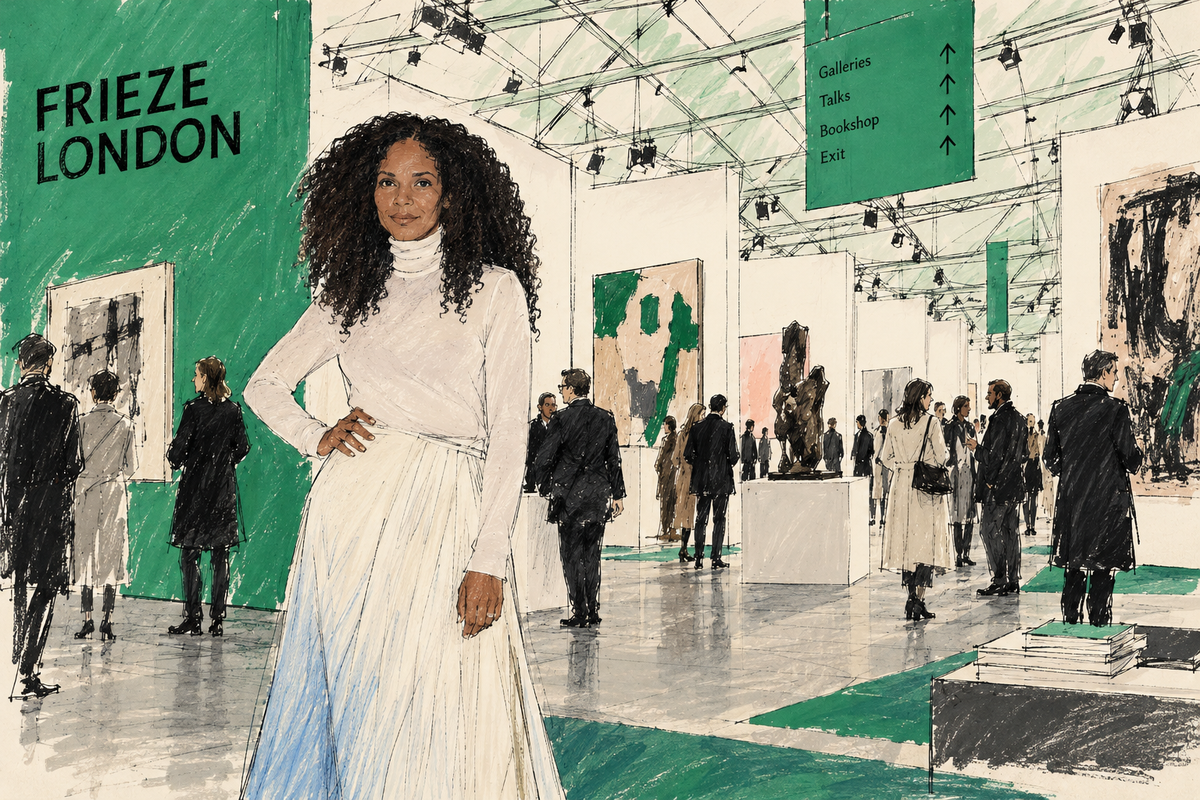
Eva Langret oversees Frieze London at a time when art fairs have become an increasingly valuable source of revenue for galleries. The event in Regent’s Park brings together established dealers, younger galleries, museum representatives and private collectors, compressing months of introductions and commercial discussions into a few days.
Langret joined Frieze in 2019 as artistic director of its London fairs, having previously worked in galleries and institutions. She now holds a wider regional role covering Europe, the Middle East and Africa. Her experience on both sides of the business has informed an approach that gives emerging galleries and artists a place alongside established international names.
The 2026 edition of Frieze London, held from 14 to 18 October, brought together 172 galleries. Its Focus section included 34 presentations selected with the involvement of an independent curatorial committee, while the Artist-to-Artist programme invited established artists to nominate younger or less widely recognised practitioners for solo presentations.
Those arrangements influence whose work reaches collectors. A gallery’s position within an international fair affects its exposure to museum curators, advisers and buyers, while participation in a curated section offers recognition that extends beyond individual transactions.
Langret has made emerging talent central to Frieze’s London programme, supported by gallerists including Alice Amati, whose namesake gallery represents artists from different countries. Amati’s presentation of Paul Robas in the 2026 Artist-to-Artist section provided an example of how a smaller gallery gains access to the audience assembled by a major fair.
The economics behind the exhibition
The global art market returned to growth in 2025 after two consecutive years of declining sales. According to the Art Basel and UBS Global Art Market Report 2026, transactions reached an estimated US$59.6 billion, an increase of 4 percent. Galleries and dealers accounted for US$34.8 billion, while public auctions generated another US$20.7 billion.
Art fairs represented 35 percent of dealers’ annual turnover, up from 31 percent in 2024 and their highest share since 2022. Mid-sized dealers recorded the largest increase in their dependence on fairs, with the proportion of sales generated at these events rising from 29 to 36 percent.
The figures explain why participation has become difficult to abandon, even as costs rise. Galleries pay for exhibition space, transport, insurance, installation, travel and staff accommodation. The same report found that dealers’ operating expenses increased by an average of 5 percent during 2025, while art-fair costs rose by 9 percent.
A smaller gallery faces a particularly demanding calculation. It must finance its presentation before knowing whether collectors will purchase the work. The commercial return also depends on introductions that develop into sales after the event, making immediate turnover an incomplete measure of success.
Fair organisers influence this equation through the galleries they admit, the placement of stands and the programmes they create for collectors and institutions. Curated sections give selected participants exposure beyond what their marketing budgets would otherwise permit, although participation still involves considerable expense.
Frieze’s Artist-to-Artist programme offers another route to visibility. Its fourth edition featured seven presentations nominated by established artists. Rather than relying exclusively on commercial selection, the programme brings practising artists into decisions about whose work deserves attention.
Women are gaining ground in the gallery market
The commercial representation of female artists has improved considerably. Women accounted for 45 percent of artists represented by galleries in 2025, compared with 35 percent in 2018, according to Art Basel and UBS. Primary-market galleries, which sell work directly from artists or their representatives, reached gender parity.
Sales have followed more slowly. Works by female artists accounted for 37 percent of dealer sales by value, up from 28 percent in 2018. The gap widened among the largest galleries: women represented 35 percent of artists at businesses generating more than US$10 million annually, but their work accounted for only 27 percent of sales.
These figures concern artists rather than the gender of gallery owners or fair directors. They nevertheless show how commercial opportunities remain unevenly distributed as women’s representation improves.
Gallery directors influence that distribution through their choices of artists, exhibition programmes and relationships with collectors. A dealer who commits to an emerging artist invests in production, promotion and the gradual development of a market. Museum acquisitions, critical recognition and institutional exhibitions all contribute to building the artist’s reputation.
The financial risks fall most heavily on businesses without substantial reserves. A successful presentation at Frieze or Art Basel introduces an artist to an international audience, while an unsuccessful fair leaves the gallery with transport, exhibition and staffing expenses to absorb.
Langret’s background at Tiwani Contemporary, known for its work with artists from Africa and its diaspora, gave her experience of representing artists whose audiences were still developing internationally. At Frieze, she has worked with curators and galleries to accommodate unfamiliar names within an event that also attracts collectors seeking established artists.
The collector relationship is changing
Art fairs bring dealers into direct contact with buyers who might otherwise remain difficult to reach. The Art Basel and UBS report found that 49 percent of buyers purchasing from dealers in 2025 were new to those businesses, compared with 44 percent the previous year.
Smaller galleries depended particularly heavily on new relationships. Among dealers with annual turnover below US$250’000, new clients represented 60 percent of buyers. The equivalent figure for galleries with turnover above US$10 million was 39 percent.
Collectors also returned to physical events as higher-value transactions shifted away from digital channels. Online-only art sales declined to US$9.2 billion in 2025, their lowest level since 2019.
Meeting a collector in person gives a dealer an opportunity to explain an artist’s work, establish its provenance and discuss its place within a wider practice. The conversation continues after the fair, through studio visits, gallery exhibitions and introductions to other collectors or institutions.
The growing participation of women as collectors adds another dimension. The Art Basel and UBS report identified changing wealth ownership and family collecting patterns among the influences reshaping the market. Women are taking a more prominent role in acquisition decisions, philanthropic initiatives and the management of private collections.
Their interests cannot be treated as a single collecting category. Individual buyers differ in their budgets, artistic preferences and motivations, while experienced collectors make decisions through long-standing relationships with advisers and galleries.
Fair organisers nevertheless have to accommodate a wider audience than the traditional network of established buyers. Frieze London’s Editions section brings prints and multiples into the programme, providing an entry point at different price levels from unique paintings or sculptures. Public exhibitions, talks and sculpture installations also attract visitors who are not attending primarily to purchase.
The business of choosing who gets seen
Frieze’s position within the international art market changed in 2025 when entertainment entrepreneur Ari Emanuel acquired the business through Mari in a transaction reported at approximately US$200 million.
The group operates fairs across several international markets, including London, New York, Los Angeles and Seoul, with expansion into Abu Dhabi scheduled for November 2026. Its commercial interests extend beyond exhibition stands to sponsorship, partnerships, publications and the wider cultural audiences associated with major events.
Growth increases the pressure to deliver attractive programmes for sponsors and collectors while maintaining the confidence of galleries and artists. Large, established dealers bring recognised names and valuable works; younger businesses contribute discoveries on which fairs build their cultural reputations.
Women now occupy influential positions throughout that process, including fair leadership, curatorial selection and gallery management. Yet greater representation does not eliminate the financial barriers facing emerging dealers or the disparities in prices achieved by male and female artists.
Langret’s work at Frieze demonstrates how decisions about access reach beyond the exhibition itself. A nomination, a carefully selected gallery presentation or an introduction to a museum curator influences which artists build lasting careers. The commercial consequences unfold over years, long after the temporary stands in Regent’s Park have been dismantled.