Inside the Beauty Industry’s Peptide Obsession
Peptides are appearing in everything from anti-ageing serums to experimental injections promising faster recovery, better skin and renewed vitality. The science behind them varies enormously, yet the market is moving much faster than the clinical evidence.
Peptides have been part of skincare for decades, but their latest incarnation has taken them well beyond the beauty counter. Women are now encountering them in longevity clinics, online wellness communities and social-media discussions about hormonal health, injury recovery and ageing. Some arrive in expensive face creams; others are sold as powders to be mixed at home and injected, often without medical supervision.
Hayenne’s review of online discussions found women purchasing peptides through online marketplaces, experimenting with combinations of compounds and sharing their experiences on social media. Among the substances attracting attention are BPC-157, promoted for tissue repair, and GHK-Cu, a copper peptide associated with skin regeneration. Neither offers the kind of established clinical evidence that consumers might expect from the confidence of the advertising.
The growing interest has also brought together two rather different markets. Cosmetics companies sell peptide-containing products to customers looking to improve the appearance of their skin, while sellers of experimental compounds appeal to women seeking relief from problems that conventional healthcare has sometimes struggled to address. Both benefit from the credibility of a scientific term that covers a remarkably broad range of substances.
How peptides became a beauty business
Peptides are short chains of amino acids, the components from which proteins are made. The human body produces many of them naturally, and researchers have used peptide-based medicines for decades. Insulin is one familiar example, while medicines containing semaglutide and other GLP-1 receptor agonists have brought a newer generation of peptide-based treatments into public view.
Their success has encouraged interest in compounds with far less clinical evidence. The popularity of prescription weight-loss injections has made the idea of manipulating biological processes through targeted medicines more familiar, while online sellers have extended the language of treatment into recovery, appearance and longevity.
Cosmetic peptides occupy a different part of this market. Skincare manufacturers have long incorporated ingredients such as palmitoyl peptides and copper peptides into creams and serums, generally promoting their ability to improve the appearance of ageing skin. Research into their effects has produced encouraging results in some laboratory experiments and small clinical studies, although the quality of evidence varies between ingredients and formulations.
GHK-Cu illustrates both the scientific interest and its limitations. Researchers have studied the copper-binding peptide for its possible role in tissue repair, collagen production and skin regeneration. A 2026 review of the published literature found considerable laboratory and animal evidence, but a much smaller body of human clinical research. Many of the cosmetic studies involved small groups, limited follow-up or formulations that were difficult to compare.
These limitations become more serious when businesses use research on a topical ingredient to promote injected versions of the same compound. A substance applied to the surface of the skin behaves differently from one entering the bloodstream or underlying tissue. Findings from a cosmetic cream cannot establish the safety or performance of an injectable preparation.
From skincare to self-experimentation
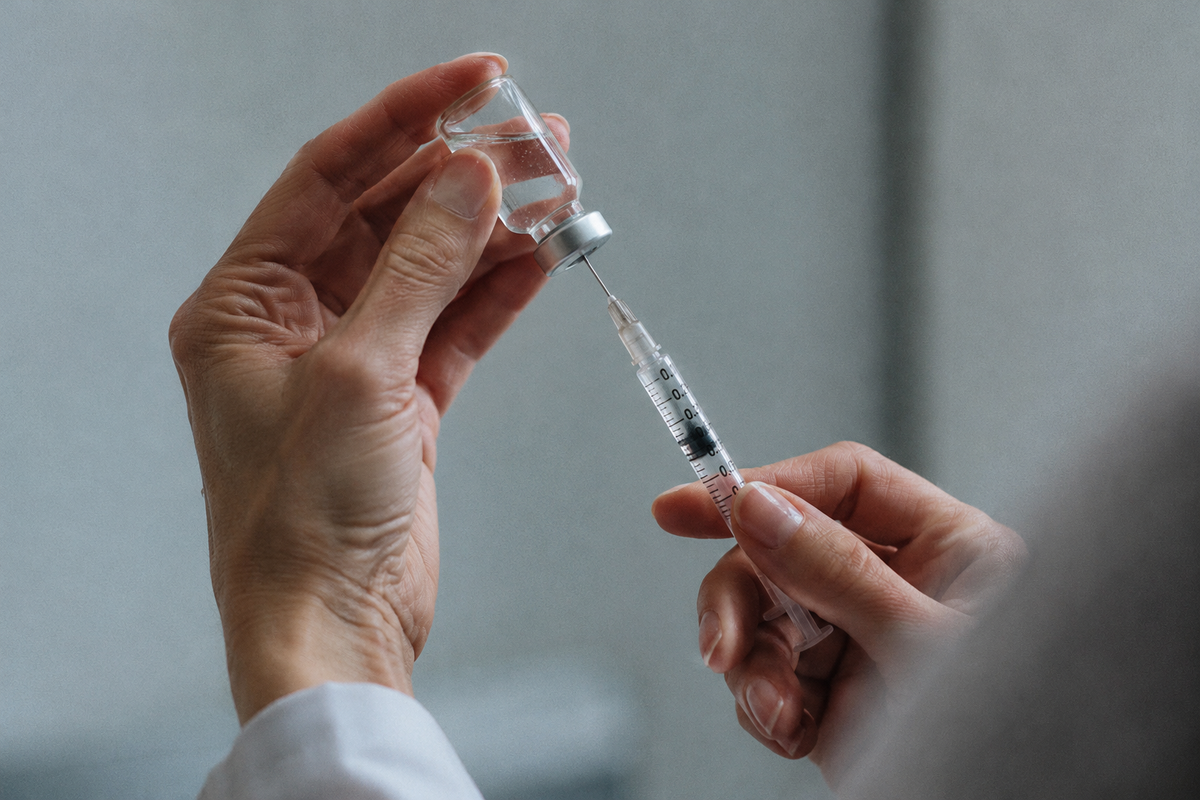
Users describe combining several peptides as stacking, while sellers advertise substances for recovery, muscle maintenance, sleep, hormonal balance and anti-ageing. Products frequently arrive as freeze-dried powders, with customers expected to prepare them for administration themselves.
BPC-157 has attracted attention because animal studies suggest possible effects on tissue repair. Its popularity among fitness enthusiasts and wellness consumers has nevertheless moved ahead of research in humans. Clinical evidence remains too limited to establish the benefits and risks of using it for the conditions promoted online.
The US Food and Drug Administration has identified possible safety concerns involving BPC-157, including immune reactions and impurities associated with peptide production. The agency has also raised concerns about injectable GHK-Cu and compounds such as CJC-1295. Pharmaceutical manufacturing requires control over purity, stability and dosage; products sold outside regulated medical supply chains do not provide the same assurances.
European regulators have begun addressing the same trade more directly. In May 2026, Austria’s Federal Office for Safety in Health Care warned about unauthorised peptides sold online as injections, nasal sprays, drops and powders. Many carried labels suggesting laboratory use, although their advertising clearly targeted consumers seeking medical or cosmetic results.
The Austrian authority warned that manufacturers, supply chains and product quality were frequently impossible to verify. Swissmedic also launched a targeted enforcement campaign in 2026 with Swiss customs and Swiss Sport Integrity, drawing attention to illegally imported peptide products promoted for improved appearance, physical performance and recovery.
The particular appeal to women
The experiences of women using experimental peptides reveal a recurring frustration. Some describe persistent pain or injuries; others report hormonal symptoms, difficulties with weight management or problems that have continued despite repeated medical appointments. Peptides appeal partly because online communities offer explanations and possible treatments where established healthcare has supplied few satisfactory answers.
Men’s interest in experimental peptides has often centred on bodybuilding and athletic performance. Among women experimenting with them, the motivations are broader, extending to menopause, reproductive health, recovery and general wellbeing.
Women who feel that conventional treatments have failed them can now search for alternatives online without another medical appointment. Social-media communities offer testimonials, product recommendations and advice on how to use different compounds, often based on personal experience rather than clinical evidence. Stories of improvement spread quickly, especially when users claim that the same peptide has helped with several unrelated health complaints.
The difficulties of treating conditions such as endometriosis, polycystic ovary syndrome and menopausal symptoms are genuine. Medical researchers continue to investigate their causes and treatments, and women frequently report delays in diagnosis or inadequate symptom management. Sellers of experimental peptides have entered that market with substances whose proposed benefits often remain untested in the populations most likely to purchase them.
There is also a psychological appeal to taking an active role in one’s treatment. Purchasing a compound, selecting a regimen and monitoring its effects can create a sense of control. The problem arises when consumers mistake that control over the process for reliable knowledge about the substance itself.
What beauty claims leave out
The commercial use of scientific research deserves particular scrutiny because evidence accumulates at different stages. A peptide can influence collagen production in cultured cells without producing a visible improvement in human skin. Animal experiments can identify promising mechanisms while leaving questions about dosage, absorption and adverse effects unresolved.
Even successful human trials establish findings about particular formulations and methods of administration. They do not automatically support claims made for other concentrations, combinations or delivery systems.
A 2026 review of GHK-Cu research found that much of the human evidence came from small cosmetic studies. One controlled study involving recovery after laser resurfacing found no objective advantage for the copper-peptide treatment, despite more favourable patient assessments. Another small trial reported improvements in eyebrow hair measurements, but the limited number of participants prevented broad conclusions about its performance.
Manufacturers also face the practical challenge of getting peptide ingredients into the skin. Many peptides do not readily cross its outer barrier, and the formulation of a serum can affect how much reaches the intended tissue. Researchers are investigating delivery techniques, including microneedles, but stronger absorption does not by itself demonstrate a clinical benefit or establish safety.
These qualifications rarely fit comfortably into beauty advertising, particularly when a product promises firmer skin, improved healing or biological rejuvenation. The most persuasive ingredient story often begins with a genuine laboratory finding and extends it well beyond what researchers have demonstrated in people.
Where the risks become more serious
A consumer buying a conventional peptide-containing moisturiser faces a different risk profile from someone injecting an experimental compound acquired through an online seller. Cosmetics sold legally in Europe are subject to product-safety requirements, whereas authorised medicines must undergo assessment of their quality, safety and efficacy for specified uses.
Products marketed outside those systems raise additional concerns. Their labels can be inaccurate, their ingredients contaminated and their manufacturing conditions difficult to establish. Injectable preparations require sterility, and contamination can cause serious infections.
In September 2025, the European Medicines Agency and national regulators warned about the growing number of illegal GLP-1 products advertised through websites and social media. Their investigation found that some products marketed as recognised medicines were unauthorised and might contain incorrect ingredients or harmful substances. The warning concerned illegal medicines rather than cosmetic peptide creams, but it exposed the vulnerability of consumers purchasing purported medical treatments through informal online channels.
The problem is unlikely to disappear simply through warnings. Women seeking relief from difficult-to-treat conditions will continue looking for new options, particularly when online communities contain accounts of apparent success. Better clinical studies, clearer product information and more responsive medical care would address some of the reasons experimental treatments have gained an audience.
Meanwhile, the beauty industry’s use of peptides is becoming harder to separate from the wider longevity market. A copper peptide in a serum, an authorised prescription medicine and a vial of unapproved research chemicals can share a name or a biochemical origin while differing entirely in how they are made, tested and used. Customers need to know exactly which product they are being offered, what studies support its advertised purpose and whether anyone has established its safety for the route of administration. The current market gives them remarkably uneven answers.