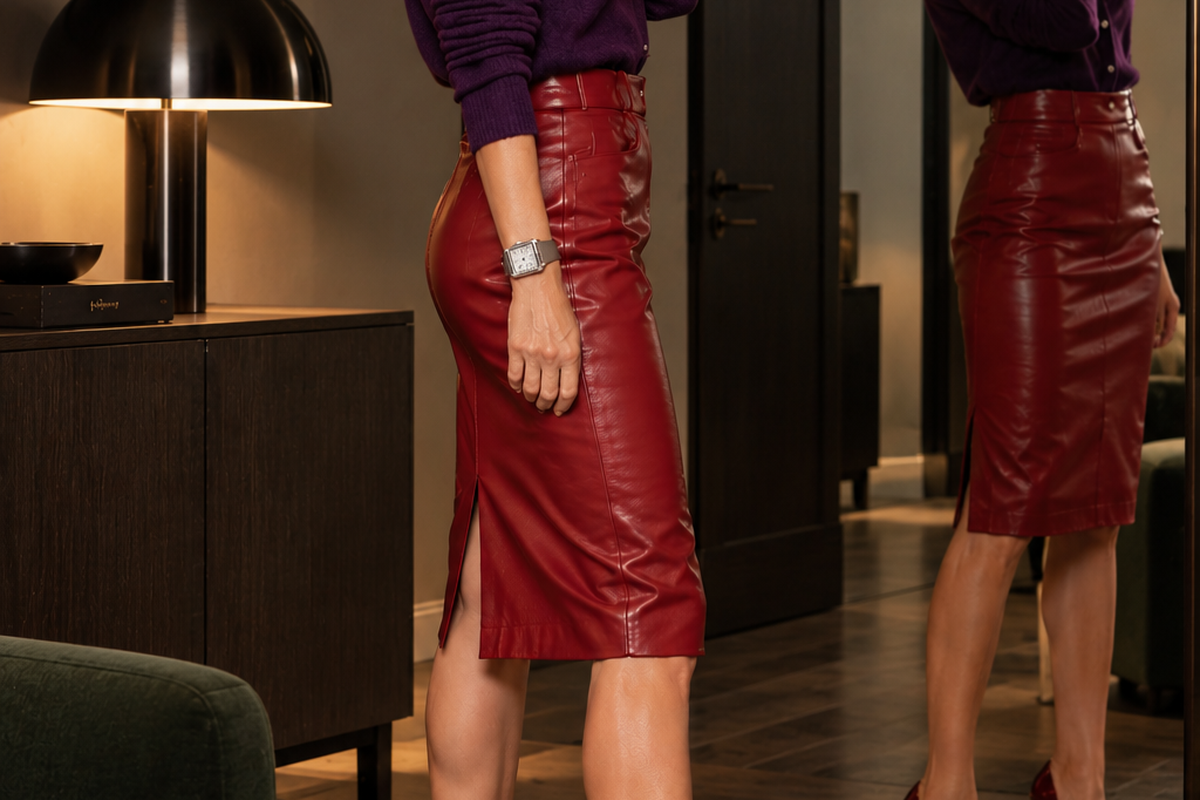
The Two Colours Fashion Can’t Stop Wearing: Red & Purple
After seasons of beige, brown and quiet neutrals, two unapologetic colours are cutting through: red and purple. From scarlet accessories to deep aubergine tailoring, this is how fashion is wearing them now — including together.
Fashion has spent the past few years finding increasingly precise names for variations of brown, beige and burgundy. This autumn, something brighter is happening. Red is still everywhere. Purple, meanwhile, has gone from difficult fashion outsider to one of the most noticeable colours of the season.
Neither is particularly subtle, which may be exactly the point. The autumn/winter 2026 collections have moved decisively away from the idea that looking expensive requires dressing exclusively in neutrals. British Vogue described bold colour as an important part of the year’s collections, while the runways have been full of deliberately unexpected combinations rather than perfectly coordinated palettes. And unlike some runway colour trends, red and purple are surprisingly easy to bring into clothes you already own.
Why Purple Suddenly Looks So Good
Purple has traditionally been a complicated fashion colour. Too pale and it can feel sugary; too bright and it can quickly become theatrical. The current version is different.
Designers are leaning towards royal purple, grape, plum, aubergine and saturated violet — shades with enough depth to work alongside autumn fabrics such as wool, leather, suede and velvet. For autumn/winter 2026, purple appeared at Celine, Loewe, Mugler, Tory Burch and Balenciaga, while Issey Miyake, Mugler and Prabal Gurung have also used saturated versions of the shade. Fashione magazines have gone as far as calling purple the colour of the season.
There is a wider shift behind it too. Fashion is rediscovering colour after years dominated by quiet luxury. Pierpaolo Piccioli’s Balenciaga palette has included jewel-like violet alongside scarlet and emerald, while collections elsewhere have embraced stronger combinations instead of asking one statement shade to sit obediently against beige.
The easiest purple to wear now is not lilac. It is something richer. Think an aubergine knit with camel trousers, a grape-coloured bag against chocolate brown or a dark violet coat worn over an otherwise simple outfit. It makes purple feel less whimsical and considerably more grown-up.
Red Never Really Went Away
Red’s story is slightly different because it has already survived several seasons. What began as the famous pop of red — a bright shoe, sock, knit or handbag added to an otherwise neutral outfit — has become part of the way people dress. British Vogue traces the recent revival back to the 2023 collections of The Row and Ferragamo, after which the styling trick travelled from the runway to street style and the high street. Almost four years later, Vogue notes that it remains part of fashion wardrobes. That longevity is important. Red no longer looks like something you bought purely because it was trending.
Designers are also using it beyond the predictable evening dress. Prada incorporated red into its autumn/winter 2026 colour combinations, pairing it with pale and navy blue, while earlier collections from Gucci, Valentino, Fendi and David Koma helped establish red across tailoring, dresses and accessories.
The modern way to wear it is often surprisingly restrained. A scarlet knit with charcoal trousers. Cherry-red shoes with denim. A burgundy-red leather bag against camel. A red cardigan beneath a dark coat. You do not need a head-to-toe red dress to make the colour work.
What Should You Wear With Red?
If red feels intimidating, start with colours you already consider neutrals.
Grey takes some of the heat out of bright scarlet and works particularly well for knitwear and tailoring.
Chocolate brown makes red look richer and less sporty. SheerLuxe has repeatedly paired the two, particularly through brown leather and red tops or accessories.
Camel softens red without making the outfit dull.
Denim is probably the easiest option of all. A red knit with straight blue jeans hardly feels like colour blocking, even though the contrast is strong.
And navy or pale blue gives red a slightly more directional feel. Prada used the combination throughout its autumn/winter 2026 collection, including pale-blue shirting with red skirts and accessories.
If you want red to look modern rather than festive, black should not automatically be the first choice. Brown, grey, denim and camel often make it feel fresher.
And What Works With Purple?
Purple looks best when you resist making it too pretty. Pair royal purple with chocolate brown, one of the combinations currently appearing across fashion editorials. Brown gives purple warmth and makes even a very saturated shade easier to wear.
Camel works particularly well with aubergine and grape.
Grey makes brighter purple feel more architectural.
Denim removes some of its formality.
And if you prefer something tonal, combine several shades from the same family — aubergine with plum rather than trying to match identical purples.
Texture also helps. Purple tends to look more convincing in substantial fabrics: suede, leather, wool, cashmere and velvet give the colour depth that a thin synthetic fabric often lacks.
Can You Actually Wear Red And Purple Together?
Yes — and arguably this is where the two colours become most interesting. The combination once carried all the usual warnings about colours that supposedly clash. Fashion has largely stopped caring.
At Prada’s spring/summer 2026 show, lilac was paired with red as part of the house’s deliberately unexpected colour combinations. British Vogue singled out lavender with raspberry red as one of the colour pairings setting the tone for 2026.
Michael Rider has pushed the idea further at Celine, where grape purple has appeared with warm red, while SheerLuxe has highlighted the same pairing as one of the strongest ways to make purple feel current.
The secret is proportion. You probably do not want every piece fighting equally hard for attention. Wear a deep purple coat with a small red bag. Add a scarlet shoe to an aubergine dress. Try a raspberry-red knit with plum trousers. Or use one shade as the clothing and the other only through an accessory. The deeper the colours, the easier the combination becomes. Cherry red with aubergine feels sophisticated. Tomato red with bright violet is much more fashion-forward.
If You Only Buy One Thing
There is no need to rebuild your wardrobe around either trend. For red, the easiest investment is still an accessory: a shoe, bag, scarf or fine knit will work with black, navy, denim, camel, grey and brown.
For purple, a knit is probably the smartest entry point. It gives you enough colour to change an outfit without requiring the confidence of a full purple coat. If you already own plenty of neutrals, both shades do something useful: they make those clothes feel new again.
And if you are ready to move beyond the pop of colour altogether, wear them together. After years in which fashion has asked us to appreciate endless variations of taupe, red and purple feel less like difficult statement colours and more like a very welcome reset.