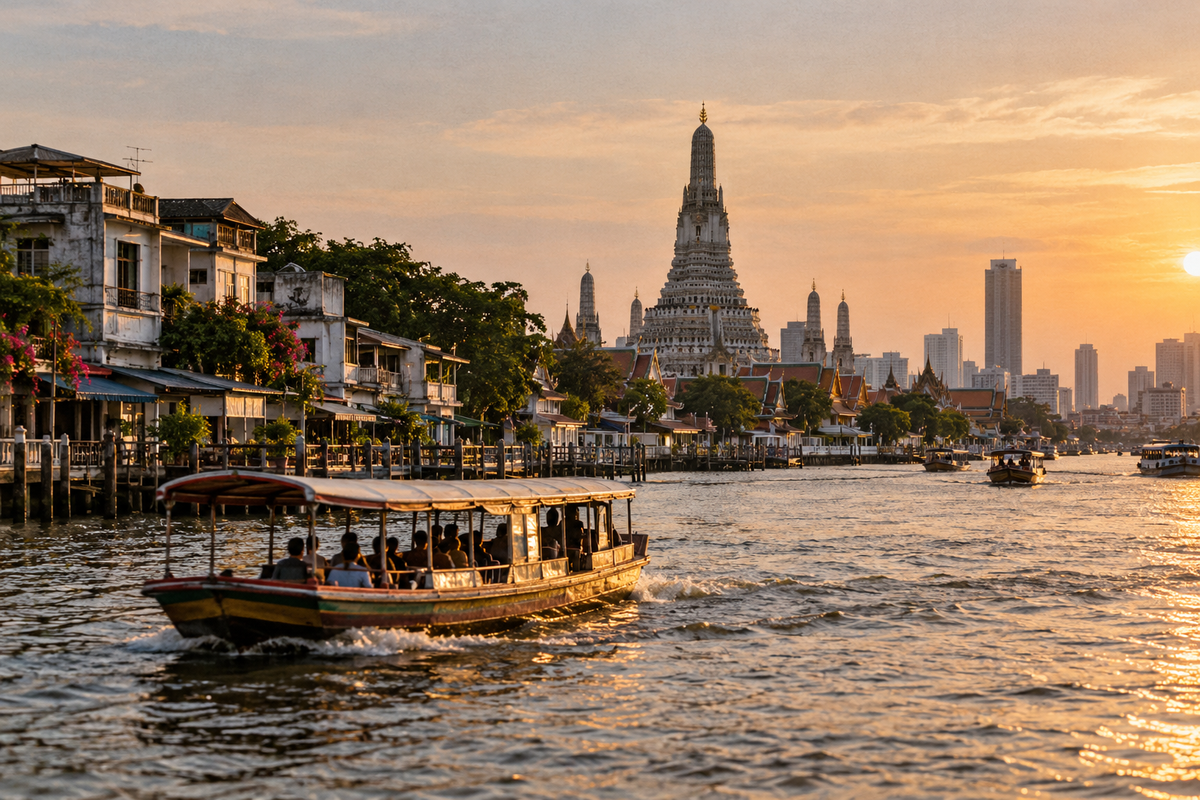
Bangkok Is Rediscovering Its Riverside
Historic shophouses, independent galleries and a growing restaurant scene are bringing new life to Bangkok’s Chao Phraya waterfront. Beyond the city’s luxury hotels, older neighbourhoods are attracting visitors interested in its architecture, food and local culture.
Bangkok’s Chao Phraya waterfront is enjoying a revival as restaurateurs, designers and hoteliers return to neighbourhoods that once formed the commercial heart of the Thai capital. Former warehouses and traditional shophouses are being converted into galleries, cafés and restaurants, drawing visitors back to the river.
The Chao Phraya shaped Bangkok’s development for centuries. Royal temples, trading houses and foreign diplomatic missions lined its banks, while canals connected residential communities with the city’s markets. As Bangkok expanded eastwards during the 20th century, much of its commercial activity moved away from the water, leaving older riverside districts with ageing buildings and declining trade.
Growing interest in these neighbourhoods has encouraged property owners to restore historic buildings, often preserving their original features. New ferry services have also improved access to parts of the waterfront, making the river a more convenient way to explore the city.
Talat Noi and Bangkok’s Old Trading Quarter
Talat Noi, a historic district close to Chinatown, has become one of Bangkok’s most interesting neighbourhoods to explore on foot. Its narrow lanes contain traditional houses, metal workshops, markets and small businesses that have operated for generations.
Much of the area’s commercial character remains, even as cafés and creative businesses move into former warehouses and shophouses. Warehouse 30, a collection of renovated Second World War-era storage buildings, now houses design shops, galleries and other creative businesses. Nearby, the former General Post Office is home to the Thailand Creative & Design Centre, which supports designers and creative enterprises.
Smaller establishments have also helped revive the neighbourhood. Timo & Tintin, a café-gallery established by a local designer in his grandmother’s former shophouse, combines coffee with photography and carefully selected objects.
At Naam 1608, a restaurant occupies a traditional wooden building overlooking the Chao Phraya. Its riverside setting and informal atmosphere provide a contrast to the large hotels further downstream. Traditional food businesses remain central to Talat Noi. Noodle stalls, market vendors and family-run restaurants operate alongside the newer cafés, preserving much of the neighbourhood’s everyday character.
A New Chapter for Chinatown
Neighbouring Chinatown has undergone similar changes, particularly around Soi Song Wat, a historic commercial street running close to the river.
For decades, the surrounding area was known for wholesale businesses, traditional medicine shops and food markets. Many remain, but restored buildings now house restaurants, boutiques and independent retailers.
One of the most prominent additions is Potong, the Thai-Chinese restaurant opened in 2021 by chef Pichaya Soontornyanakij, better known as Chef Pam.
The restaurant occupies a former herbal medicine shop that belonged to her family for five generations. Its restoration preserved the building’s historical character while introducing a contemporary menu drawing on Thai and Chinese culinary traditions.
Potong’s success helped bring renewed attention to the surrounding streets. Chef Pam subsequently opened Khao San Sek, a more casual restaurant near Soi Song Wat, where cafés, fashion boutiques and independent businesses have also opened.
The area has attracted visitors interested in its architecture as well as its food. Several older commercial buildings retain their original façades, wooden interiors and narrow staircases, offering a different experience from Bangkok’s modern shopping districts.
Traditional noodle shops and family businesses continue to operate among the newer establishments, making Chinatown particularly rewarding for visitors who venture into its smaller streets.
Crossing the River to Thonburi
On the western bank of the Chao Phraya, Thonburi offers a quieter side of Bangkok. Its network of canals, known locally as klongs, connects residential neighbourhoods, temples and small riverside businesses.
Long-tail boats remain one of the most practical ways to explore these waterways, particularly where narrow canals pass traditional wooden houses and neighbourhood markets.
Wat Arun, the Temple of Dawn, is among the best-known landmarks on this side of the river. Its distinctive central tower rises above the waterfront, providing one of Bangkok’s most recognisable views.
Further inland, Wat Paknam Phasi Charoen is home to a monumental golden Buddha statue overlooking the surrounding canals.
Smaller cultural spaces offer a closer view of local life. Artist House, a traditional canal-side property, combines an art gallery, café and shop selling locally made handicrafts.
Thonburi’s appeal owes much to its residential neighbourhoods, where temples, homes and local businesses remain connected by water. Guided boat trips allow visitors to explore these areas without relying entirely on Bangkok’s congested roads.
Contemporary Art Finds New Spaces
Bangkok’s growing contemporary art scene has also found a home in former commercial and industrial buildings.
Bangkok Kunsthalle opened in Chinatown in 2024, occupying an old publishing building damaged by fire. Rather than conceal every trace of its past, the venue incorporates parts of the original structure into its exhibition spaces.
Dib Bangkok, which opened in 2025 near the city’s industrial port, presents work by Thai and international contemporary artists.
Established institutions offer a broader view of the country’s artistic traditions. The Jim Thompson House Museum, assembled from traditional Thai houses, contains an extensive collection of art and decorative objects.
The neighbouring Jim Thompson Art Center hosts contemporary exhibitions and includes a library and shop selling art books and work by younger designers.
Together, these venues give visitors an opportunity to explore Bangkok’s cultural life beyond its best-known temples and tourist attractions.
Where to Stay Along the River
The revival of the Chao Phraya has brought fresh attention to its hotels, from historic institutions to smaller properties in older neighbourhoods.
The Mandarin Oriental, Bangkok, first opened in 1876 and remains one of the city’s best-known hotels. Its original building recalls an earlier era of international travel, while the modern Garden Wing underwent a major refurbishment completed in late 2025.
Capella Bangkok offers a more contemporary style of riverside accommodation, with private villas, landscaped grounds and direct views of the water.
For travellers interested in the historic neighbourhoods, Sala Rattanakosin provides a smaller alternative close to the river. Some rooms look directly towards Wat Arun, while its rooftop offers views of the temple at dusk.
The Siam, created by Thai musician and actor Krissada Sukosol Clapp and his family, combines traditional antiques, contemporary design and references to Bangkok’s cultural history.
Smaller hotels and restored shophouses can put visitors closer to the neighbourhoods they intend to explore, although riverside accommodation varies considerably in price, location and transport links.
Beyond the Waterfront
The Chao Phraya also provides access to Bangkok’s greener areas, including Bang Kachao, a large tract of land surrounded by a bend in the river.
Often called the city’s green lung, Bang Kachao contains quiet cycling routes, gardens and pockets of woodland. Visitors can reach it by a short ferry crossing before hiring bicycles to explore its smaller paths.
Further north, Ko Kret offers another escape from central Bangkok. The island is known for its car-free lanes, riverside communities and pottery traditions associated with the Mon people.
Both destinations show how closely Bangkok’s waterways remain connected to daily life, even as the surrounding city continues to expand.
Exploring Bangkok by Water
The river also offers an alternative to Bangkok’s congested streets. Public ferries connect several historic districts, temples and commercial areas, while private long-tail boats can reach smaller canals inaccessible to larger vessels.
Visitors can combine a morning in Talat Noi with lunch in Chinatown before crossing to Thonburi, or spend a separate day exploring the canals and residential neighbourhoods.
The Chao Phraya Tourist Boat and other river services stop near several major attractions, although routes, fares and operating hours should be checked before travelling.
Much of the waterfront is best explored on foot. Walking between markets, restored buildings and traditional food stalls reveals how older businesses coexist with the new restaurants and galleries.
Bangkok’s riverside revival is bringing these historic districts back into the city’s commercial and cultural life. The Chao Phraya remains a working waterway, with ferries, trading boats and residential communities alongside its growing collection of hotels, restaurants and galleries.
Beyond the views from luxury hotels, the neighbourhoods along its banks offer visitors a closer look at Bangkok’s architec