
Carinthia: The Alpine Summer Destination More Travellers Should Know About
Ask someone in Britain, France or the Netherlands to imagine an Austrian summer and they are likely to picture Salzburg, the Tyrol or perhaps a few days in Vienna followed by the mountains. Carinthia, tucked against Italy and Slovenia in Austria’s south, receives far less attention outside the countries close enough to drive there.
It deserves considerably more. The landscape offers something that many Alpine holidays struggle to combine. There are serious mountains, including the Hohe Tauern in the north, but summer days do not have to revolve around hiking. Below them sit clear lakes warm enough to swim in properly, villages with beaches and boats, elegant lakeside hotels and towns where an afternoon can just as easily disappear over lunch as on a trail.
The atmosphere changes as you travel south through Austria too. Carinthia sits where the Alpine and Adriatic worlds begin to meet, with Slovenia and Italy close enough to influence the food, architecture and pace of summer life. You are still unmistakably in Austria, only with warmer water, softer evenings and rather more temptation to spend the afternoon beside a lake.
Start With The Lakes
Carinthia has more than 200 bathing lakes, and choosing between them is less about finding the prettiest than deciding what kind of holiday you want. Wörthersee is the obvious introduction. The long turquoise lake stretches west from Klagenfurt past handsome villas, bathing areas and resort towns such as Pörtschach and Velden. It has enough hotels, restaurants and activity to work for travellers who like their nature with a little life around it. You can swim in the morning, take a boat across the lake, have lunch on a terrace and still return to Klagenfurt for the evening.
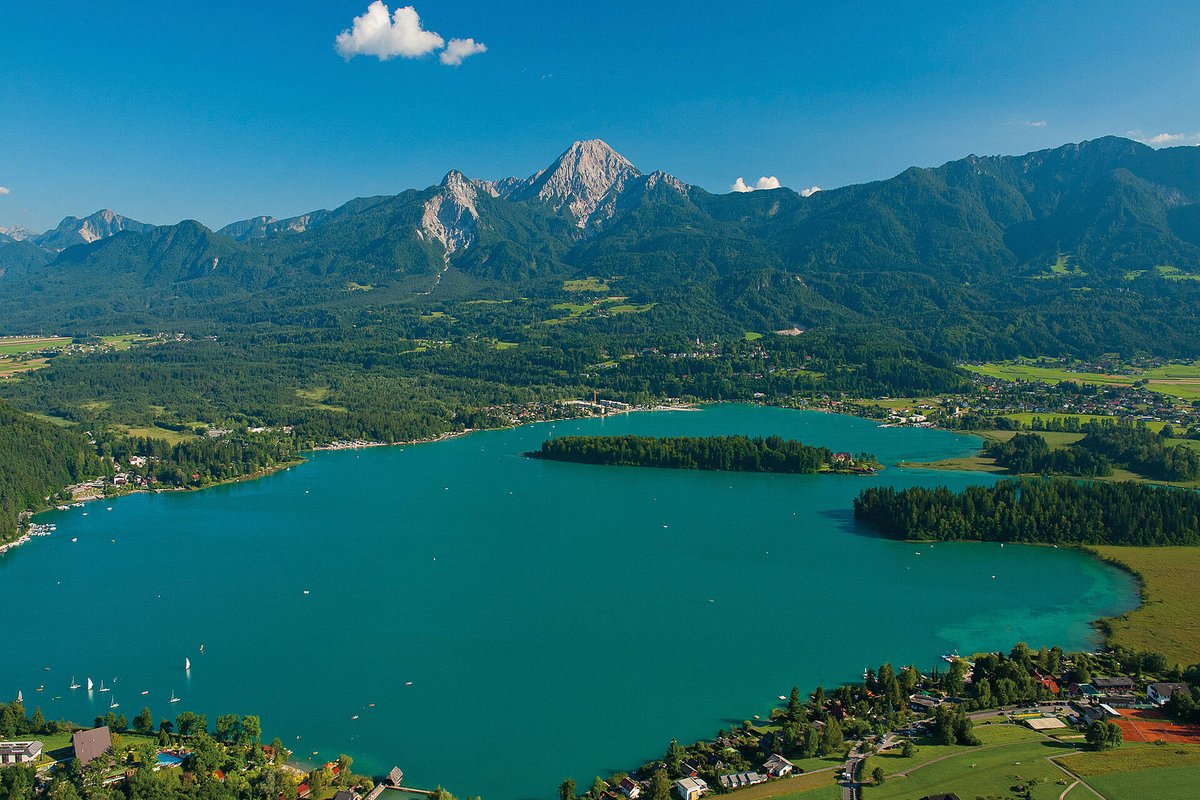
Faaker See feels smaller and more intensely coloured, its water turning an extraordinary blue-green against the dark mountains behind it. The Mittagskogel rises beyond the southern shore and gives the lake the sort of Alpine backdrop that normally requires considerably colder water.
Further west, Weissensee moves in another direction. Development around its shores is restrained, forests reach close to the water and the surrounding mountains become part of the day rather than scenery viewed from a hotel terrace. It suits travellers who want to swim, walk, cycle and spend long stretches outside without needing much else.
Millstätter See sits somewhere between those moods. Mountains descend towards a broad deep-blue lake, villages run along its shores and there is enough choice in accommodation and restaurants to stay for several days rather than use it simply as a stop.
None requires the familiar Alpine bargain in which the mountains are spectacular but the water is something you admire rather than enter. Carinthian lakes can reach temperatures of up to 28°C in summer, so swimming is part of the holiday rather than a test of character.
You Do Not Have To Choose Between A Lake Holiday And A Mountain Holiday
Staying beside the water does not mean giving up the Alps. The distance between an easy morning at the lake and a proper mountain walk can be remarkably short. To the north, the Hohe Tauern contain Austria’s highest peaks and a landscape of high valleys, glaciers and mountains above 3,000 metres. Further south, the Nock Mountains are rounder and greener, with walks that feel less severe while still giving wide Alpine views. Around many of the lakes, shorter trails climb directly from the shore. This flexibility changes the rhythm of a week. One day can begin early with several hours in the mountains and end in the water. The following morning might involve nothing more ambitious than cycling around part of a lake, stopping for lunch and finding somewhere to swim afterwards.
For people travelling as a couple or family, that range solves a familiar problem. Not everyone wants to spend six consecutive days hiking, and an Alpine destination can become awkward when one person wants the mountains while another would much rather read beside the water. Carinthia rarely forces the choice.
Cycling works particularly well for the same reason. Routes follow rivers and lakes, while e-bikes open up hillier terrain without turning every outing into training. Serious cyclists can still find the climbs.
Klagenfurt And Villach Are Worth More Than A Supply Stop
Neither city demands several days, but both prevent a Carinthian holiday from becoming an uninterrupted sequence of mountains and lakes.
Klagenfurt has the ordered, handsome centre you would expect from an Austrian regional capital, with Renaissance courtyards, cafés and enough restaurants for an evening away from the water. Wörthersee begins at the city’s western edge, which gives Klagenfurt an unusual combination of urban life and easy access to swimming.
Villach lies further west, close to Italy and Slovenia, with the Drau running through the city and several lakes within easy reach. It makes an especially practical base for anyone planning to move around rather than remain beside one lake.
The border position is difficult to ignore here. From Villach, Italy is close enough for lunch and Slovenia close enough for a day trip, although constantly crossing borders can become unnecessary once you realise how much there is within Carinthia itself.
The Food Starts To Look South
Austrian food can be substantial, particularly after a day in the mountains, and Carinthia still has the dishes you would hope to find. Kärntner Kasnudeln, pasta parcels traditionally filled with potato and curd cheese, are the regional dish most visitors encounter sooner or later.
Yet the food also reflects Carinthia’s position between Central Europe and the Adriatic. Italian and Slovenian influences sit naturally beside Austrian cooking, while lakes provide freshwater fish and mountain farms supply cheese, meat and other local produce.
It creates a dining culture that suits summer particularly well. You can have the comforting Austrian lunch after a hike without feeling that every evening must involve another plate designed for February.
The region is also close enough to wine-growing areas in southern Austria and neighbouring Slovenia to interest travellers who normally build holidays around food as much as scenery.
Go Before Carinthia Becomes An Obvious Alternative
Calling anywhere in Austria undiscovered would be absurd. Carinthia has been a summer destination for generations, particularly among Austrian and German-speaking visitors, and Wörthersee is hardly a secret.
What feels different is its profile further west. Travellers who readily name Lake Como, the Dolomites, Interlaken, the Tyrol or Salzburg may know very little about Faaker See or Weissensee. That relative absence from the standard international Alpine circuit is part of the appeal.
You are not arriving somewhere without tourism infrastructure. Hotels, bathing facilities, cable cars, cycle routes and mountain restaurants are already there. Nor does the region require the compromises that sometimes accompany places marketed as undiscovered. The pleasure comes from finding an established Alpine summer culture that has not become an automatic choice for everybody else.
The best time depends on the holiday you want. July and August bring the warmest lake conditions and the fullest summer atmosphere, while June and September can suit hiking particularly well and generally feel quieter. Lake resorts naturally have more seasonal energy in midsummer, so anyone travelling at the edges of the season should check hotel, restaurant and lift schedules before deciding where to stay.
Do Not Try To See The Whole Region In One Trip
Carinthia looks manageable on a map, which encourages over-planning. A week divided among five lakes, two cities, the Grossglockner and three mountain areas soon becomes a driving holiday with occasional scenery.
Choose a lake or small area as the base and explore from there. Wörthersee works well for a first visit if you want restaurants, swimming, Klagenfurt and easy day trips. Faaker See and the Villach area suit travellers who also want quick access towards Italy and Slovenia. Weissensee is a stronger choice when quiet, walking and nature matter more than nightlife. Millstätter See gives you an attractive middle ground with mountains close behind the water.
Then leave some days empty. That may be the part of Carinthia that distinguishes it most from a conventional mountain itinerary. The region rewards activity, but it does not require constant achievement. A swim can replace an excursion. Lunch can stretch into the afternoon. A mountain can be admired from a rowing boat instead of climbed. For Western European or any other travellers accustomed to choosing between an Alpine holiday and a warm-water summer break, Carinthia quietly offers both. You still wake to mountains, but by lunchtime you can be swimming beneath them.


